Brazil Faces Strategic Dilemma with Second Batch of Tamandaré-Class Frigates
Brazil's decision to build a second batch of Tamandaré-class frigates poses a strategic dilemma, as it requires resources and predictability to maintain production.
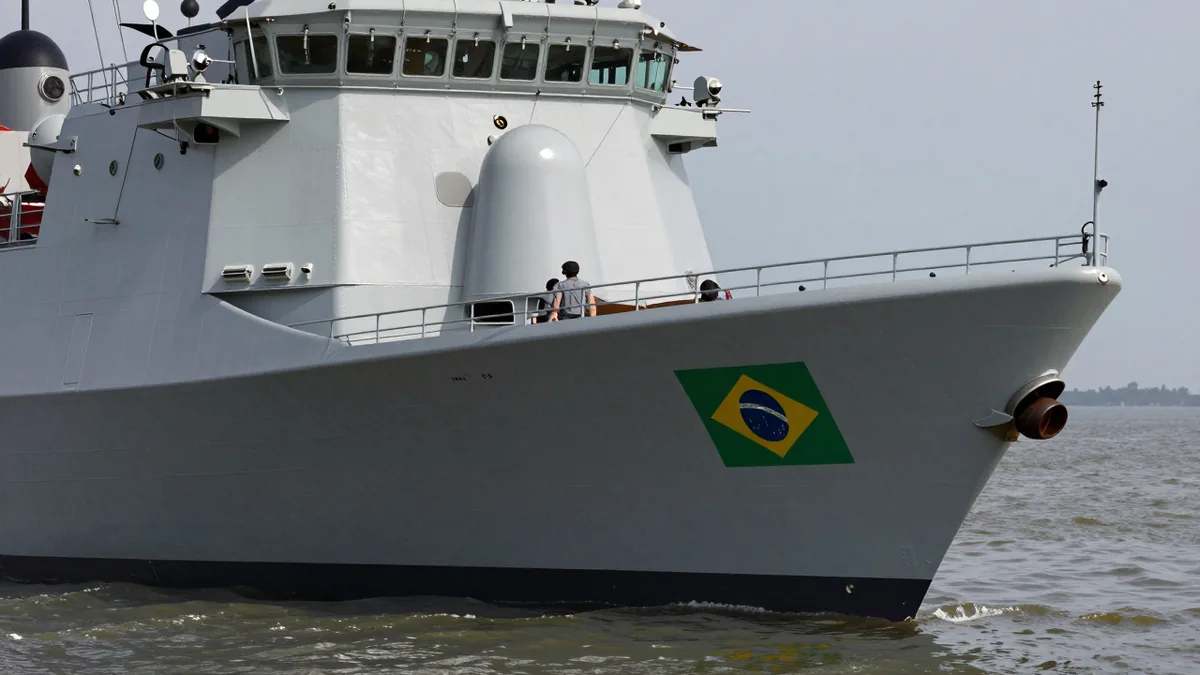
Brazil's naval industry has made significant strides in recent years, with the country demonstrating its ability to construct modern warships domestically. The construction of the fourth unit of the first batch of Tamandaré-class frigates marks a major milestone in this effort. However, this achievement has also created a dilemma for Brazil, as it must now decide whether to continue production with a second batch of four ships. The first batch of four frigates has been a major success, with the country investing heavily in infrastructure, technology transfer, and workforce development. This has enabled Brazil to establish a robust industrial base, capable of producing modern warships with a displacement of around 3,500 tons. The continuity of production would allow Brazil to leverage this infrastructure and experience to build additional units with greater efficiency. However, an interruption in production could have significant consequences. It could disperse the specialized workforce and suppliers, leading to increased costs and a loss of expertise when production is eventually resumed. This would require Brazil to rebuild part of its recently consolidated capacity, undermining the country's efforts to establish a sustainable naval industry. The second batch of Tamandaré-class frigates has already gained political and industrial backing. In April, a Memorandum of Understanding was signed between the Ministry of Defense and the Águas Azuis Consortium, outlining the framework for the construction of four additional units. If this agreement is transformed into a contract, the Tamandaré class will reach a total of eight ships. From an operational perspective, the expansion of the Tamandaré class is necessary to address a pressing requirement. The first four ships represent a significant technological leap for the Brazilian Navy, but they alone do not solve the need to recompose its escort force. Eight units would enable the Navy to distribute ships between different areas of responsibility, maintain a portion of the fleet in maintenance, and preserve a more consistent naval presence in Brazilian territorial waters. For the international community, Brazil's case highlights a dilemma faced by many countries: developing a domestic defense industry is more challenging than simply acquiring equipment from abroad, and preserving it requires continuity. Once a chain of suppliers and a specialized workforce are established, an interruption in production can result in the loss of knowledge and capabilities that took years to build. The second batch of Tamandaré-class frigates should not be viewed solely in terms of the number of ships involved. If the contract is signed, Brazil will be able to transform the Tamandaré program into a sustainable naval industry, preserving infrastructure, knowledge, and suppliers for future projects. However, a significant interruption could lead to a loss of efficiency and require new cycles of training and industrial structuring for future expansions. The construction of the F203 demonstrates that Brazil has proven capable of building a modern frigate on its own territory. The real challenge now is to decide whether the country has the political, budgetary, and industrial capacity to maintain this line in operation. The second batch of Tamandaré-class frigates represents a choice about the future of Brazil's naval industry and its ability to transform a procurement program into a permanent strategic capability.