Japan Seeks AARGM-ER Missile to Degrade Warship Air Defenses
Japan's FY2027 defense budget request includes the AGM-88G AARGM-ER, a U.S.-made supersonic anti-radiation missile intended to suppress enemy warship air
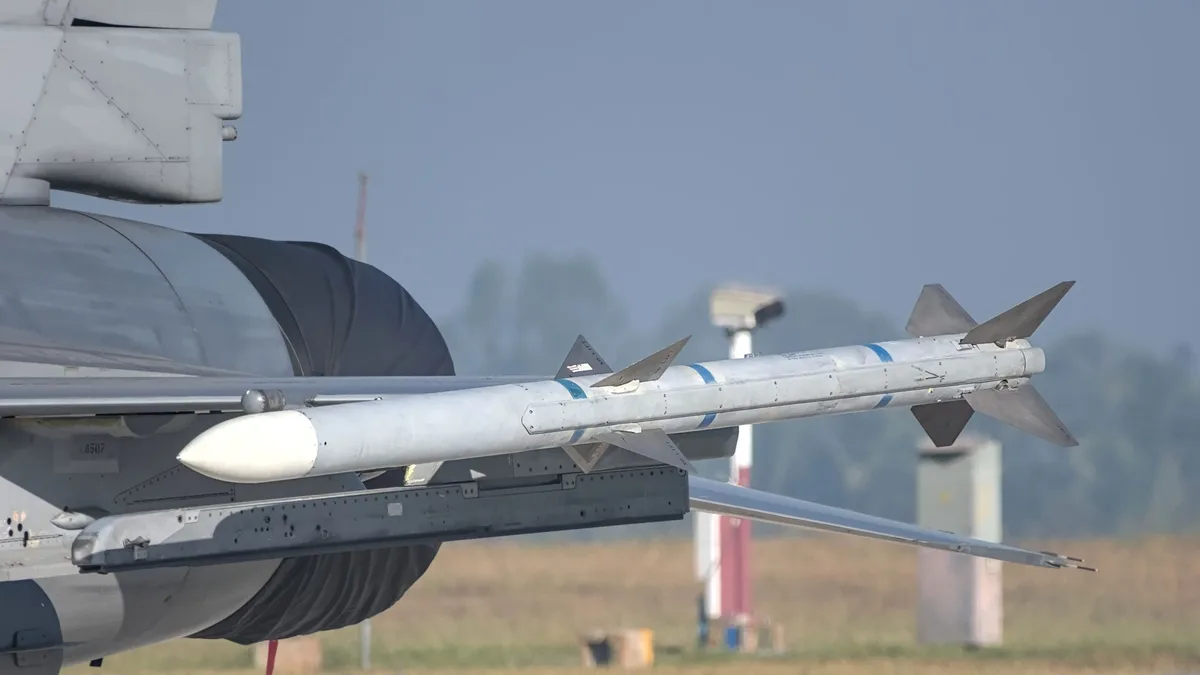
Japan is seeking to acquire the U.S.-made AGM-88G Advanced Anti-Radiation Guided Missile-Extended Range (AARGM-ER) under its fiscal year 2027 defense budget request. The missile is intended to suppress enemy warship air defenses and enable long-range anti-ship strikes, according to the Japanese Ministry of Defense's request released on August 31.
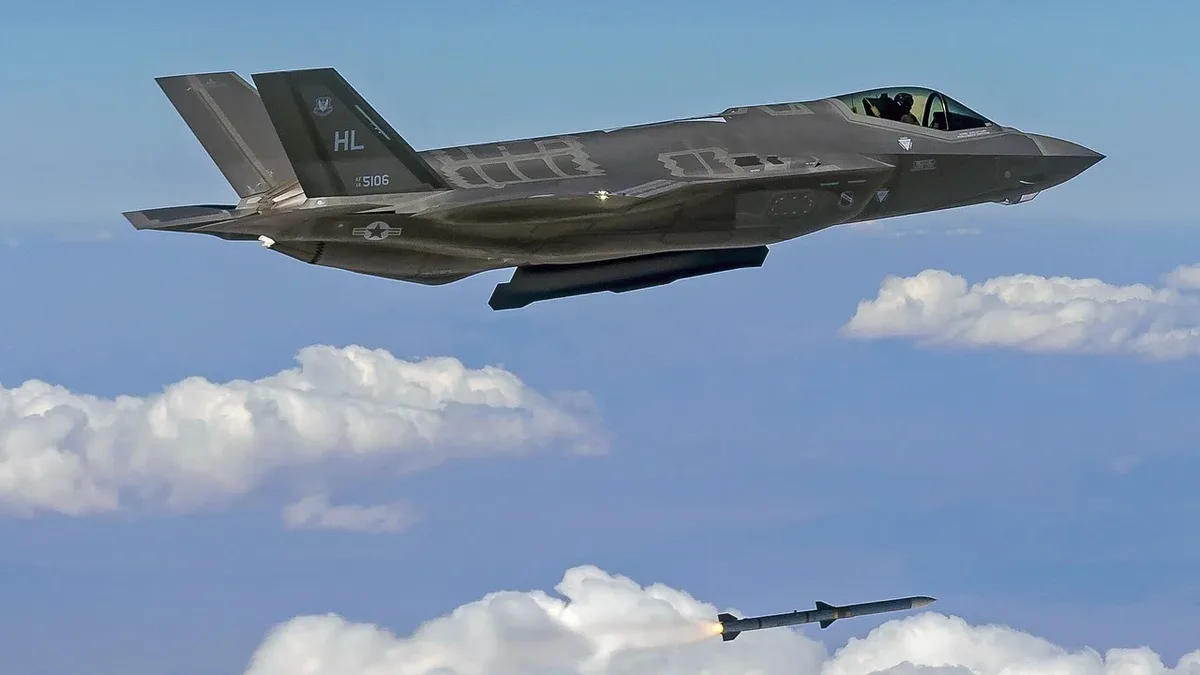
General Takehiro Morita, Chief of Staff of the Japan Air Self-Defense Force (JASDF), provided details on the missile's intended role at a September 1 press conference in Tokyo. He described AARGM-ER as a supersonic, air-launched anti-radiation missile compatible with both the F-35A and F-35B fighter jets. Morita said the weapon would be "an asset that contributes to the effective conduct of anti-ship attacks."
Procurement and Operational Role
The funding for AARGM-ER was submitted as an unpriced "item request," with no specific quantity or cost disclosed. While the missile is not itself an anti-ship weapon, its primary function is to attack elements of an adversary's air-defense system. This could degrade a warship's ability to defend itself against follow-on anti-ship missile strikes.
At the press conference, Naval News asked General Morita if the acquisition signaled a greater JASDF emphasis on SEAD (Suppression of Enemy Air Defenses) and DEAD (Destruction of Enemy Air Defenses) capabilities. Morita declined to elaborate on specific operational scenarios, citing security concerns regarding actual weapon employment.
Weapon Specifications and Development
AARGM-ER is being developed and produced by Northrop Grumman for the U.S. Navy. It is an extended-range evolution of the AGM-88E AARGM, incorporating a new high-performance airframe, propulsion system, and advanced warhead. The Pentagon's Director, Operational Test and Evaluation states the missile is intended to suppress or destroy enemy air defenses.
The system is designed to detect, track, and suppress or destroy radio-frequency-enabled surface-to-air missile systems that employ shutdown tactics. Its maritime relevance was demonstrated in a U.S. Test on November 30, 2022. An AARGM-ER launched from a U.S. Navy F/A-18 Super Hornet successfully engaged an operationally representative moving maritime target at the Point Mugu Sea Range off Southern California.
Captain Alex Dutko, the U.S. Navy's PMA-242 program manager, said the test demonstrated the missile's vital ability to engage moving maritime targets for sea lane control during conflict.
Japan's Expanding Maritime Strike Posture
General Morita's explicit reference to degrading warship air defenses coincides with Tokyo's rapid expansion of its maritime strike capabilities. Japan is developing and acquiring a growing family of long-range stand-off weapons, including improved variants of the Type 12 surface-to-ship missile.
In a separate initiative within the same FY2027 budget request, Tokyo is also moving to add a new air-to-air role to its extended-range ASM-3 Kai supersonic anti-ship missile. Naval News had previously reported JASDF plans to employ the ASM-3ER against high-value airborne targets like AWACS and aerial refueling tankers.
Morita stated that software modifications would allow this missile to retain its long-range characteristics while gaining an air-to-air capability.
Strategic Context and Future Plans
Japan's planned acquisition comes as the U.S. Navy is planning a temporary "strategic pause" in its own AARGM-ER procurement, which Naval News reported in April is expected to resume in FY2028. When asked if the acquisition of AARGM-ER and the modified ASM-3 Kai reflected a broader change in JASDF operations, Morita said the service is examining various capabilities in light of what Japan calls "new ways of warfare." He declined to discuss specific operational concepts.
Tokyo's initiative highlights a push to acquire not only longer-range strike weapons but also the specialized suppression assets needed to penetrate increasingly dense naval air-defense networks. In a maritime strike scenario, AARGM-ER could be deployed ahead of or alongside dedicated anti-ship missiles to neutralize enemy radars and defensive sensors.