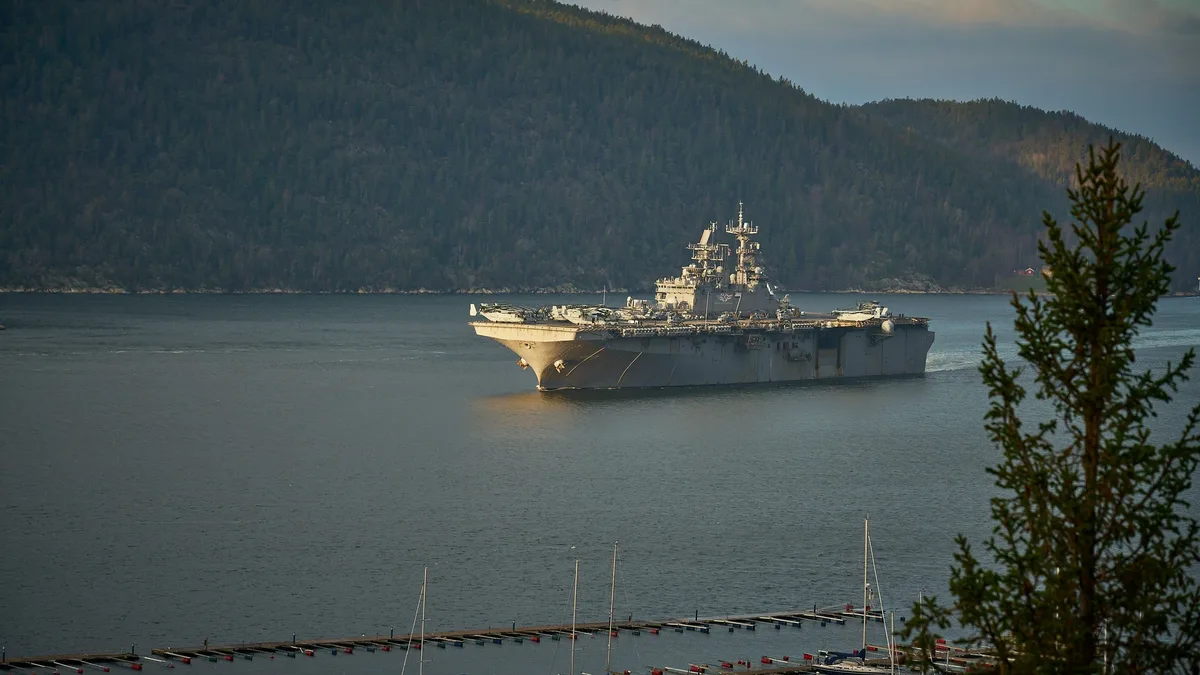
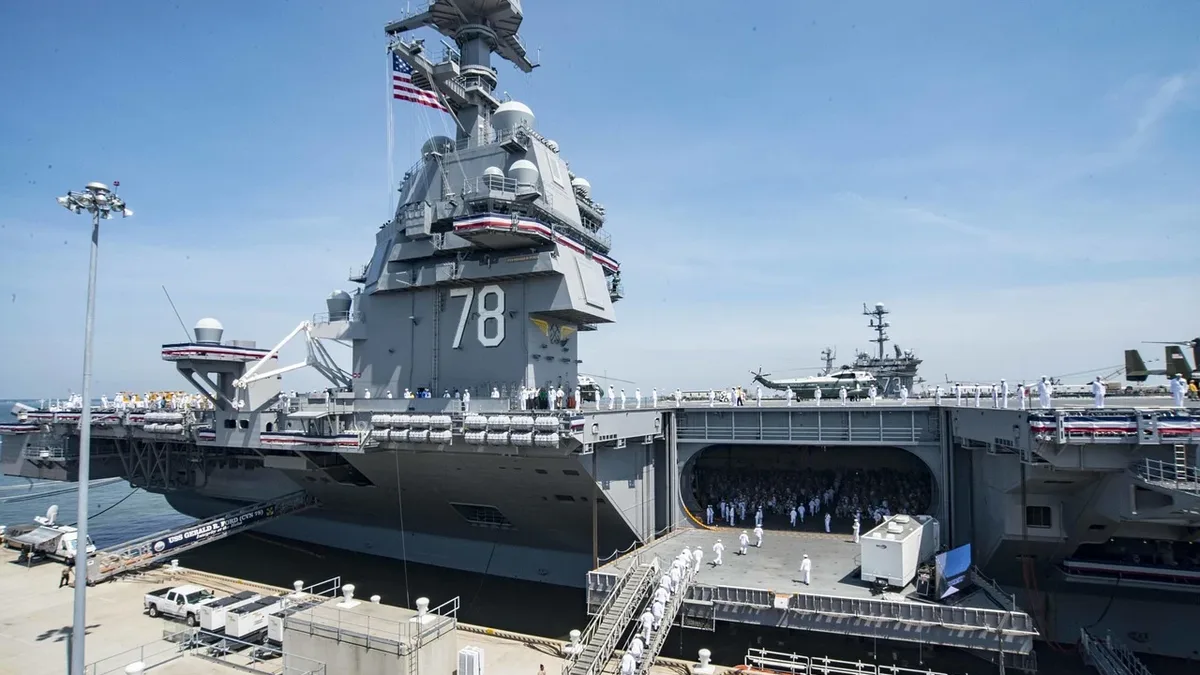
Japanese Industry Hesitates on U.S. Navy Frigate Deal
Japanese defense firms, led by Mitsubishi Heavy Industries, are cautious about bidding for a U.S. Navy frigate contract due to heavy required investment in U.S. Shipyards and competing domestic naval commitments.
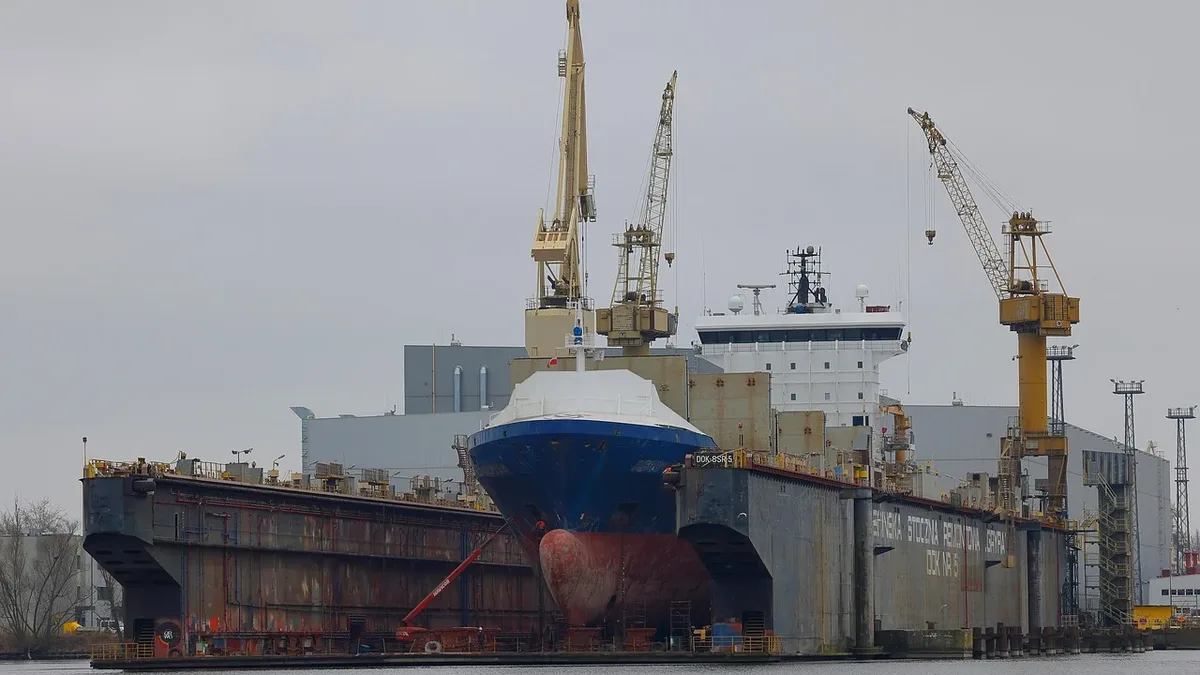
Japanese industry is growing hesitant over a potential deal to supply frigates to the U.S. Navy. According to a report from USNI News on September 1, the U.S. Is considering foreign-built designs, but the prospect demands heavy investment and clashes with Japan's own naval shipbuilding pipeline.
A White House memorandum issued in August opened the door for the Department of Defense to consider foreign warship designs by invoking a national-security exemption. The directive generally ties foreign construction to investment in U.S. Shipbuilding facilities. The candidates reportedly include South Korea’s Chungnam-class, Türkiye’s Istanbul-class, and Japan’s Mogami-class frigate built by Mitsubishi Heavy Industries (MHI).
The Japanese Contender and Its Drawbacks
The Japanese design under serious consideration is not the existing Mogami class but an upgraded variant, often called the New FFM. This version offers increased tonnage and more strong combat capabilities suited for U.S. Blue-water operations. The Royal Australian Navy has already selected this same variant.
Some observers hope the Japanese FFM could be selected, citing the strength of the Japan-U.S. Alliance and confidence in Japanese industry's adherence to schedules. In Japan, however, these hopes are tempered by significant concerns.
The Burden of the "Finland Model"
A major reason for caution is the expected use of a "Finland model" for the U.S. Frigate acquisition. Under this approach, the first two hulls would be built at a foreign shipyard, after which foreign investment would be directed toward U.S. Shipbuilding infrastructure. This model mirrors one used for the U.S. Coast Guard’s Arctic Security Cutter program.
From Japan's perspective, this model presents several problems. Only the first two ships, or a small number, would be built in Japan, limiting direct economic benefits. There are also concerns about possible specification changes after production shifts to the U.S. The greatest worry, however, is the scale of investment required in American shipyards. Revitalizing U.S. Shipbuilding is a major policy objective for the Trump administration, making such investment an indispensable element of any deal.
Structural Challenges in U.S. Shipbuilding
The need for foreign investment stems from deep structural problems within the U.S. Naval industrial base. A December 2025 report by the Center for Strategic and International Studies (CSIS) detailed these challenges. They are not only about too few shipyards but involve long-term erosion of broader capabilities.
Following the Cold War, declining demand led to shipyard closures and consolidation. This eliminated excess production capacity, creating a structure where output cannot be rapidly increased. A severe shortage of skilled labor compounds the issue, with recruitment difficulties and an aging workforce affecting productivity and quality.
Shipyard infrastructure is aging, hindering modern production methods. The supply chain is fragile, with many critical components dependent on single-source suppliers. While Japanese and South Korean industries have aggressively adopted digitalization and automation, such modernization has progressed more slowly in U.S. Naval shipbuilding.
Mitsubishi's Competing Commitments
For prime contractor Mitsubishi Heavy Industries, the U.S. Deal presents a major dilemma. Winning would require committing substantial financial investment and human resources to support U.S. Industrial revitalization, a significant burden.
A second issue is MHI's saturated domestic pipeline. The company is committed to sustained warship construction for the Japan Maritime Self-Defense Force (JMSDF). Following the Aegis System Equipped Vessels (ASEVs) now under construction, the company must build the upgraded FFM, new replenishment ships, and potentially a new class of Aegis-equipped destroyers. MHI must also support the export and construction of the FFM for Australia.
These commitments leave the company with very limited spare capacity to provide substantial support to the United States. Consequently, a notably cautious mood prevails among Japanese stakeholders. The question is not only whether the FFM design can win, but whether Japanese industry can afford the capital, workforce, and technology needed to help rebuild part of the U.S. Industrial base while meeting its own growing demands.