Russia's war spending triggers cash crisis
Russia's war spending pushed the state to the brink of running out of cash this spring, forcing austerity measures, according to a Bloomberg report.
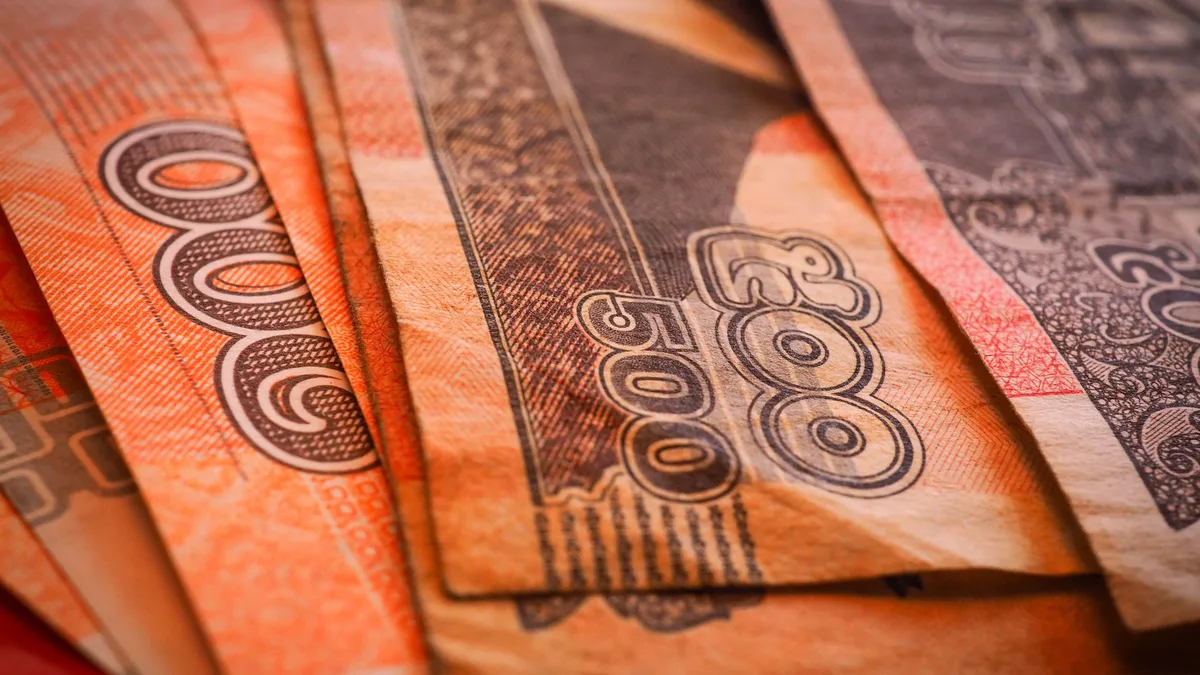
Russia's war spending pushed the state to the brink of running out of cash this spring, according to a Bloomberg report. The report offers the clearest account yet of how the financial burden of the Ukraine invasion is straining Moscow's finances.
Citing people familiar with the matter, Bloomberg reported that Finance Minister Anton Siluanov warned Prime Minister Mikhail Mishustin in April that the government would not have enough money to make all scheduled payments on time. The balance on the federal treasury's single account fell to roughly minus 5.5 trillion rubles, or about $65.3 billion in the red.
This forced the government into an austerity regime. It has since cut non-military spending by 35% and is expected to trim federal staffing by 15%, Bloomberg wrote.
Financial Strain and Deficit
Russia's federal deficit for January through April reached 5.8-5.9 trillion rubles, or 2.5% of GDP. This was nearly double the same period a year earlier, according to Finance Ministry data reported by Forbes Russia.
Bloomberg separately wrote in June that Finance Ministry and central bank officials had warned President Vladimir Putin that war spending was on an unaffordable trajectory. Overruns on military and security budget lines potentially reaching 2 to 4 trillion rubles ($23 to 47 billion) this year, the Financial Times separately reported.
Putin has refused to cut military outlays, instead directing cuts elsewhere. Debt-servicing costs alone now consume roughly 4 trillion rubles ($47 billion), about 9% of the federal budget, according to the Russian government's budget.
Official Denials and Context
Corroboration of the cash-crunch specifics in Russian government statements and state-aligned media is limited. No state-run Russian outlet or Kremlin spokesperson has publicly addressed the Bloomberg report.
Notably, Siluanov himself told a Rossiya-1 journalist four days before Bloomberg's story ran that the budget "has no problems whatsoever" and is "fully backed by resources." Kremlin spokesman Dmitry Peskov has previously acknowledged the deficit while describing it as manageable "current difficulties."
The report comes amid deepening woes in Russia brought about by the war it started in Ukraine four years ago. These range from economic problems to increasingly bold Ukrainian long-range strikes on Russian logistics hubs and military facilities.
Amidst all this, a secretive visit to Moscow by CIA director John Ratcliffe this week fuelled further speculation. The New York Times reported that at least part of the message he delivered was to provide an unfiltered view of the bleak situation the country is facing on the battlefield and at home.
Nonetheless, the Kremlin so far seems to be doubling down on its war footing. Instead of cutting military expenditures, which have risen sharply, painful cuts are being made elsewhere.
And the war is set to continue, too. Russian leaders routinely rebuff the concept of a negotiated peace on anything less than Russia's maximalist terms.
Parliamentary elections are coming up in September but are unlikely to change much. The only anti-war opposition party, Yabloko, was prohibited from running by the country's supreme court two and a half weeks ago. The official grounds cited were copyright infringement in Yabloko's campaign materials.