Saab and Kraken unveil autonomous drone seeker vessel
Saab UK and Kraken Technology Group have developed and tested a prototype autonomous 'drone seeker' vessel.
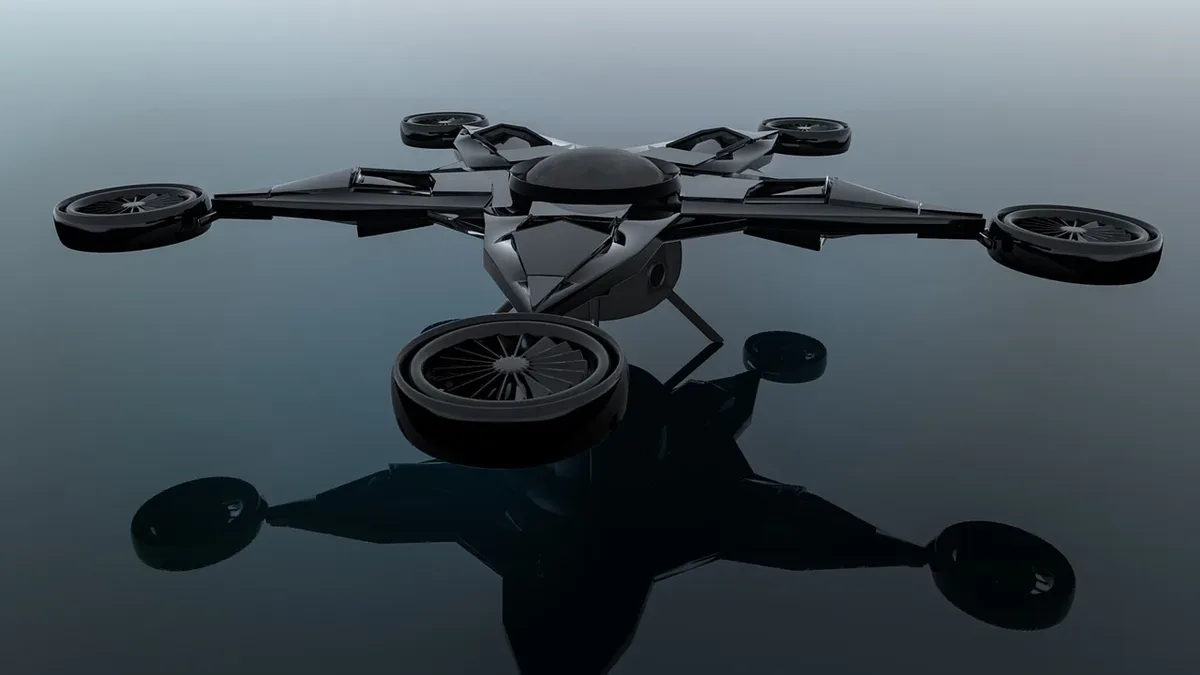
Saab UK and Kraken Technology Group have developed an experimental autonomous drone seeker vessel. The prototype integrates Saab’s Giraffe 1X radar with Kraken’s K3 SCOUT uncrewed surface vessel to detect airborne threats at sea.
This rapidly deployable counter-UAS system is designed to protect shipping, ports, and offshore energy infrastructure from emerging aerial threats. It provides enhanced early warning by detecting and tracking small airborne targets, including drones, at extended ranges. The configuration could operate independently or alongside conventional vessels to safeguard critical maritime sites.
Rapid development from concept to prototype in under seven months
Teams from Saab UK and Kraken accelerated the project from drawing board to working prototype in just under seven months. This period included a series of sea trials to understand radar performance in maritime conditions. Recent trials demonstrated that the radar could be fitted to the vessel and operated effectively at sea.
Andy Fraser, Managing Director of Saab UK, stated that this pioneering, UK-manufactured capability reflects the strength of the partnership and the maturity of the respective technologies. He emphasized the ability to respond at pace to the evolving threat landscape. Mal Crease, CEO and Founder of Kraken Technology Group, said the prototype is exactly what the K3 SCOUT was designed to do: integrate with mission-relevant payloads to operate in austere maritime environments. The integration remains an experimental prototype, with trials exploring how such an autonomous platform could contribute to wider air-surveillance networks.
System designed to protect shipping, ports and offshore infrastructure
The autonomous vessel is intended to strengthen defence of maritime assets against evolving drone threats without requiring crewed platforms. Saab and Kraken believe the system has significant potential to strengthen protection of shipping, ports, offshore energy assets, and national infrastructure.
It demonstrates the role of autonomous systems in a hybrid navy by extending sensing and early-warning capabilities. The concept is to place radar sensors aboard autonomous vessels to extend air surveillance away from crewed warships, countering increasingly frequent drone threats.
Both technologies manufactured in Fareham, reflecting local defence industry strength
Both the K3 SCOUT and the Giraffe 1X radar are produced in Fareham. Kraken manufactures the K3 SCOUT there, while Saab UK produces the Giraffe 1X radar at its facilities in the same town.
The Giraffe 1X is a compact, lightweight 3D radar from Saab’s wider Giraffe family, proven in demanding operational environments globally. Its size and weight allow installation on a range of fixed and mobile platforms. The K3 SCOUT is a low-signature, high-performance USV designed around a modular payload architecture, allowing different sensors and mission equipment to be fitted.
Integration demonstrates modularity and hybrid navy potential
The integration of the Giraffe 1X into the K3 SCOUT’s modular payload bay demonstrates the vessel's flexible architecture. This enables the rapid deployment of new sensors and payloads, supporting the UK’s hybrid navy concept as outlined in the government's Defence Investment Plan.
Kraken, a world-leading USV company, is scaling production. The company has raised $175 million in Series B funding, achieved a $1 billion valuation, and is scaling production to 1,000 vessels per year from a new 35,000-square-foot facility. The K3 SCOUT can be operated entirely autonomously. The latest trials used its payload space to turn the vessel into an autonomous drone seeker. The system remains in the experimental stage following recent sea trials to assess radar performance in maritime conditions.