South Korea boosts defense budget to record $53.9 billion
South Korea has announced a record defense budget of $53.9 billion for the coming year, an 8.2% increase focused on high-tech capabilities and

South Korea will spend a record 73.28 trillion won, approximately $53.9 billion, on its military in the coming year. The budget, announced on September 3, represents an 8.2 percent increase over the previous year.
The Ministry of National Defense stated the spending plan focuses on strengthening self-defense capabilities due to a rapidly changing security environment. It aims to transition from a troop-centered force to one oriented toward high-tech systems. The budget increase comes amid deepening security concerns about North Korea, China, and Russia.
U.S. President Donald Trump's recent statements have also encouraged Seoul toward greater self-reliance. In August, Trump posted on social media that planned military exercises with South Korea would be scaled back. He cited his good relationship with Kim Jong-un and said Pyongyang had been "unthreatening and respectful," calling the exercises "totally inappropriate and hostile."
Budget priorities and self-reliance
The ministry outlined eight major spending priorities. The first is building a self-reliant, Korean-led military capability. Funding to prepare for the transfer of wartime operational control from the United States has increased by 35 percent. South Korea aims to complete this OPCON transition by 2029, which would see Seoul commanding both its own and American troops during any conflict on the Korean Peninsula.
This shift requires enhanced capabilities to detect and respond to threats from North Korea, particularly its nuclear and missile programs. Command-and-control systems will be improved with a new wartime military information distribution system for the joint Combined Forces Command.
Addressing demographic and technological shifts
South Korea's conscription-based military faces a challenge from an aging population. To mitigate a shrinking pool of recruits, the government plans to strengthen reserve forces and outsource some non-combat duties to the private sector.
A significant technological push is underway. Spending on artificial intelligence and unmanned ground monitoring systems will rise. The ministry stated it will "use drones as the main fighting vehicle for our military," with the budget for this area up almost 20 percent from last year.
The investment will cover drone swarms, reconnaissance drones, various loitering munitions, and a comprehensive counter-drone system. The military also plans to train half a million personnel as "drone warriors."
Major equipment programs
Substantial funding is allocated to specific big-ticket defense programs. The budget for the KF-21 Boramae fighter jet has increased nearly two and a half times to 3.3 trillion won. Production of the first operational KF-21s is already underway.
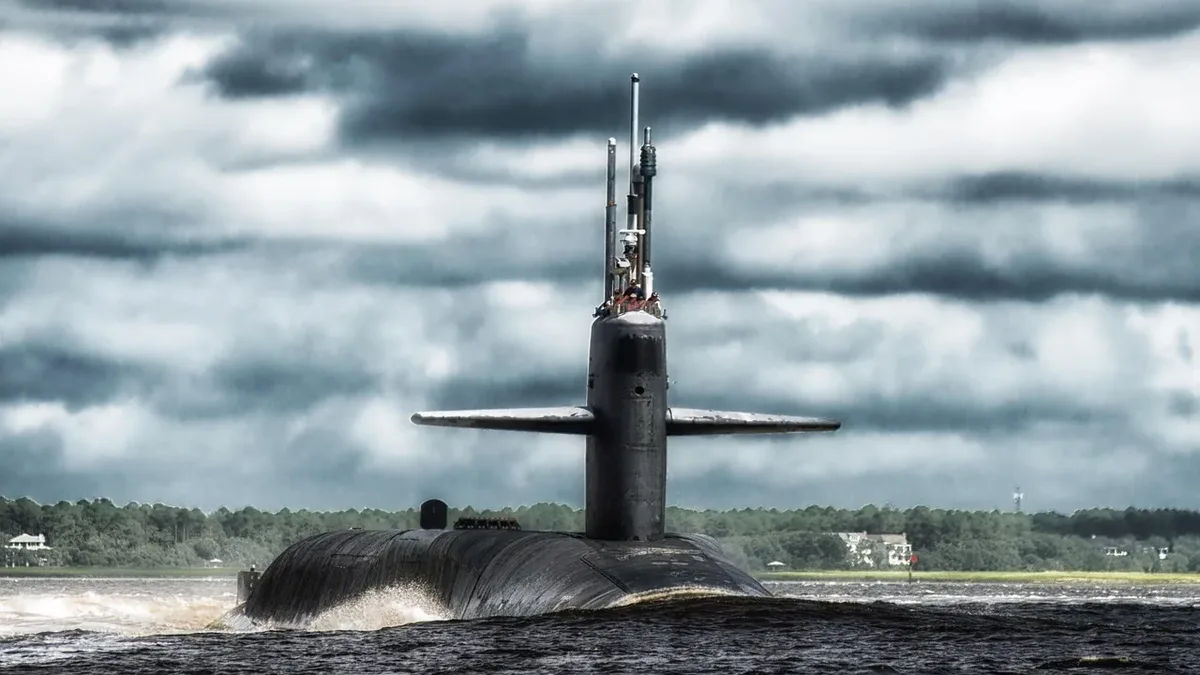
Other named programs receiving significant investment include the long-range L-SAM air defense system and MUAV medium-altitude reconnaissance drones. The budget also allocates nearly 100 billion won to accelerate the development of nuclear-powered submarines.
| Program | Budget Allocation (KRW) | Key Detail |
|---|---|---|
| OPCON Transition Prep | 35% increase | Goal for completion by 2029 |
| Drone Systems | ~20% increase | To become "main fighting vehicle" |
| KF-21 Boramae Fighter | 3.3 trillion | Allocation up nearly 2.5 times |
| Nuclear Submarine Development | ~100 billion | Program gathering pace |
Supporting industry and personnel
Other priorities include improving soldier welfare, pay, and housing. The government will invest more in future defense technologies to boost national sovereignty and the high-tech industrial base. Specific areas for investment include semiconductors, aviation propulsion, hard-kill lasers, and quantum technologies.
The budget also aims to support the entry and growth of small and medium-sized enterprises in the defense sector, including efforts to heighten export prospects.
Despite the record total, the defense budget currently represents 2.33 percent of South Korea's GDP. U.S. President Donald Trump had previously pressed Seoul to raise its defense spending to 3.5 percent of GDP.