Ecuador and U.S. Launch Secure Border Strategy Against Crime
Ecuador and the United States have formalized a joint Secure Border strategy to combat drug and arms trafficking on Ecuador's northern border with

Ecuador and the United States formalized a joint Secure Border strategy on June 22 to combat transnational crime on Ecuador's northern border. The agreement, signed via an Implementation Letter, brings together the U.S. Bureau of International Narcotics and Law Enforcement Affairs (INL) with Ecuador's Ministries of the Interior and National Defense and the National Customs Service (SENAE).
Ecuador's Ministry of Defense stated the U.S. Will provide technical assistance, equipment, and best practices to strengthen national capabilities to prevent, detect, and respond to threats along land, maritime, and air corridors. Through this action, Ecuador and the United States reaffirm their commitment to working together to confront transnational threats, strengthen border security, and build more effective institutions for the benefit of citizens, the ministry said.
A Border Under Criminal Pressure
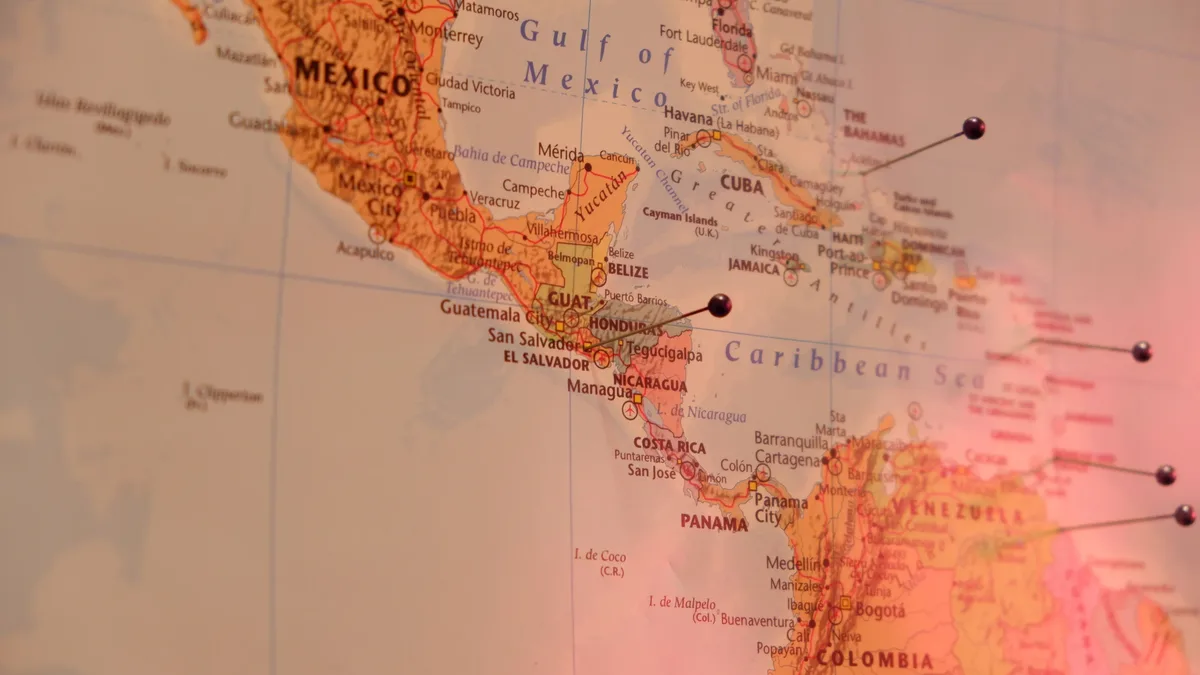
The 730-kilometer border with Colombia is a strategic corridor for criminal organizations. The terrain includes mountains, jungle, and rivers with over 90 unauthorized crossing points, making continuous surveillance difficult. Defense Minister Gian Carlo Loffredo revealed that Ecuador seized 252 metric tons of narcotics in 2024, a national record. He stated that 70 to 80 percent of the cocaine produced in southern Colombia enters Ecuador through this northern area.
Illicit flows are bidirectional. While Colombian cocaine transits Ecuador to reach maritime routes, weapons and ammunition flow in the opposite direction to equip criminal groups. Security expert Jean Paul Pinto told Diálogo that arms trafficking is a serious problem linked to increasing drug trafficking. He described a form of "criminal governance" in several border areas where organizations impose their own rules.
Shared Intelligence and Risk Analysis
The strategy's first phase focuses on Carchi province, which includes the major Rumichaca commercial crossing. The approach shifts from broad, reactive controls to intelligence-driven interventions. It integrates risk analysis, information sharing, operational alerts, and coordinated patrols among police, military, and customs authorities.
This methodology aims to identify suspicious patterns and concentrate limited resources where they will have the greatest impact. SENAE's involvement is key for distinguishing between criminal activity and legitimate trade. SENAE Director General Sandro Castillo called it a "strategic commitment to confront threats that recognize no borders." The strategy also provides for coordination mechanisms with Colombian authorities when operational conditions require.
Cooperation to Strengthen National Capabilities
Secure Border is part of broader U.S.-Ecuador security cooperation. This includes equipment transfers like 12 interceptor boats for the Ecuadorian Navy, with the first three delivered in May 2026. The U.S. Embassy said the contribution will also include long-range drones to enhance capabilities against drug trafficking and illegal fishing.
In July 2025, the two countries signed an agreement to facilitate the exchange of liaison officers between the Ecuadorian National Police and U.S. Agencies to improve information sharing. These combined mechanisms are designed to help Ecuadorian institutions detect threats before they reach ports or international routes. The initial Carchi model will be evaluated over two years with the goal of replicating it in other strategic areas, including the southern border with Peru.