FNSS Unveils U-MAV Unmanned Amphibious
FNSS introduced the U-MAV, a modular unmanned amphibious vehicle, at TEKNOFEST Mavi Vatan 2026. The 8-ton platform can switch between ten mission roles in about 40 minutes and moves at 7 knots in water and 70 km/h on land.
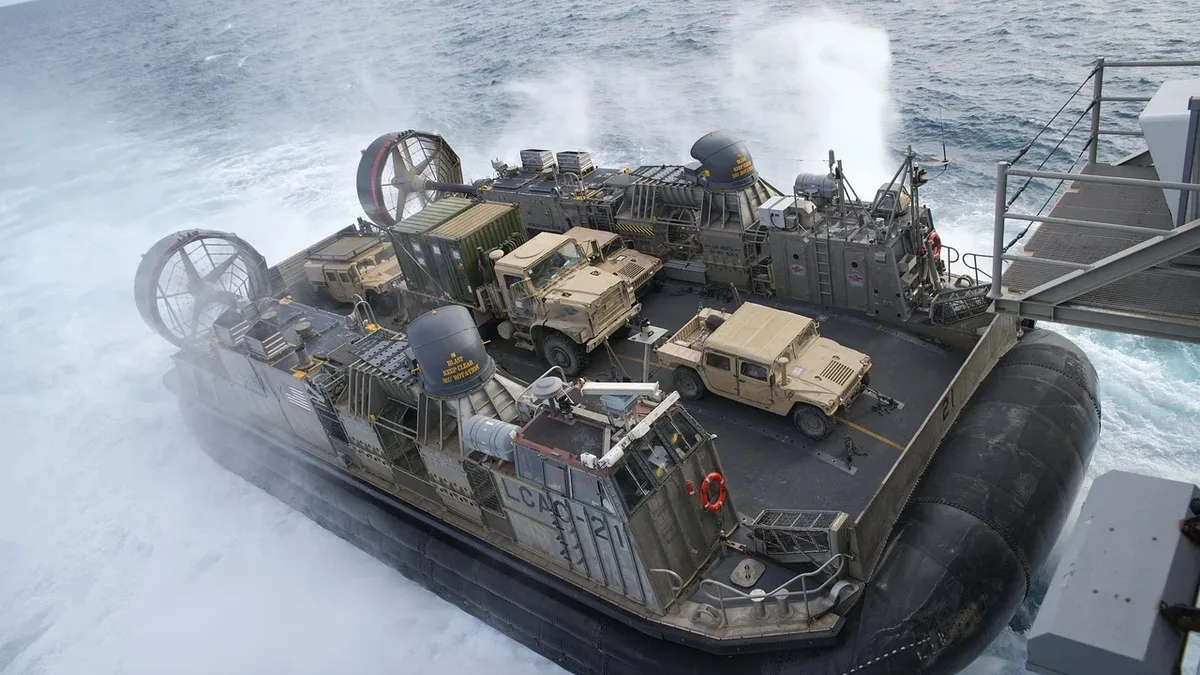
FNSS announced the U-MAV, a Multi-Purpose Modular Unmanned Amphibious Vehicle, during the TEKNOFEST Mavi Vatan 2026 event held by the Gölcük Naval Shipyard Command in Kocaeli from 20 to 23 August 2026. The vehicle, also called ZAHA, is designed to remove crews from the highest-risk phase of amphibious assaults and to operate alongside the Turkish Naval Forces’ Marine Assault Vehicles (MAV). It engages shore defenses ahead of the manned wave and keeps operators in a protected zone.
The 8-ton platform transitions from sea to shore without interruption, achieving 7 knots in water and 70 km/h on land. Its modular payload can be swapped in roughly 40 minutes, enabling ten distinct mission variants such as Fire Support, Mine Clearance, Electronic Warfare, and Casualty Evacuation. FNSS CEO Selim Baybaş highlighted that the U-MAV combines the company’s engineering expertise, the proven MAV platform, and ongoing R&D in unmanned amphibious vehicles.
Modular Mission Architecture
A key feature of the U-MAV is its interchangeable mission payloads on a common base. The rapid 40-minute field swap allows operators to configure the vehicle for the required role, whether that be reconnaissance, counter-drone, or logistics support. Multiple variants can operate together within the same operation, sharing a common platform and sustainment infrastructure to reduce logistical footprints. The modularity of the U-MAV could be tracked in our stats database, reflecting its flexibility across missions.
| Feature | Specification |
|---|---|
| Platform weight | 8 tonnes |
| Sea speed | 7 knots |
| Land speed | 70 km/h |
| Powerpack | 300 hp |
| Power-to-weight | 37.5 hp/tonne |
| Module swap time | 40 minutes |
| Mission variants | 10 |
| Communication range | 3 km LOS |
Mobility and Control
The U-MAV’s 300-hp powerpack provides reliable propulsion across water and land, while an independent suspension system delivers high manoeuvrability. Selectable tyre options adapt the vehicle to varied ground conditions. Low visual, thermal, and acoustic signatures enhance stealth, and the platform offers ample payload volume for casualty evacuation and mission equipment.
Control modes include autonomous, remote-controlled, or hybrid operation. An encrypted mesh network, GNSS/INS navigation, and IFF identification maintain command and control continuity. The inertial navigation unit sustains position estimates when satellite signals are denied, and communications can be extended via UAV relay support. Upon datalink interruption, the vehicle first enters a safe hold state and then either automatically returns to base or continues navigation based on configuration.
The U-MAV is fully transportable by road, rail, and sea, and is compatible with heavy-lift helicopters such as the CH-47F Chinook and strategic airlifters including the C-130 Hercules and A400M. This compatibility aligns with modern joint logistics frameworks.
Artificial Intelligence and Structural Monitoring
Onboard AI processes camera feeds in real time, transmitting detection data rather than high-bandwidth video. Detected elements receive threat scores and are tracked with timestamps. The system can apply new target types or engagement rules instantly in the field.
The vehicle also incorporates Nurol Teknoloji’s Armor Integrity structural monitoring system. Sensors detect impact location, direction, and severity, calculate remaining structural capacity, and track latent damage. This data is transmitted to operators and the chain of command, allowing tactical decisions such as manoeuvring or mission continuation even when connectivity is lost. The information is stored locally and sent upon reconnection, ensuring uninterrupted decision cycles.
Operators can monitor mission status through interfaces similar to those displayed in the squad view, providing real-time situational awareness.
The platform first transitions to a safe hold state upon datalink interruption, then either automatically returns to base or continues the navigation task depending on configuration.