Indian Navy Seeks 1,000 km Ship-Based Loitering Munitions
The Indian Navy has requested information on acquiring a medium-range loitering munition system for ships and shore vehicles, with a range exceeding 1,000
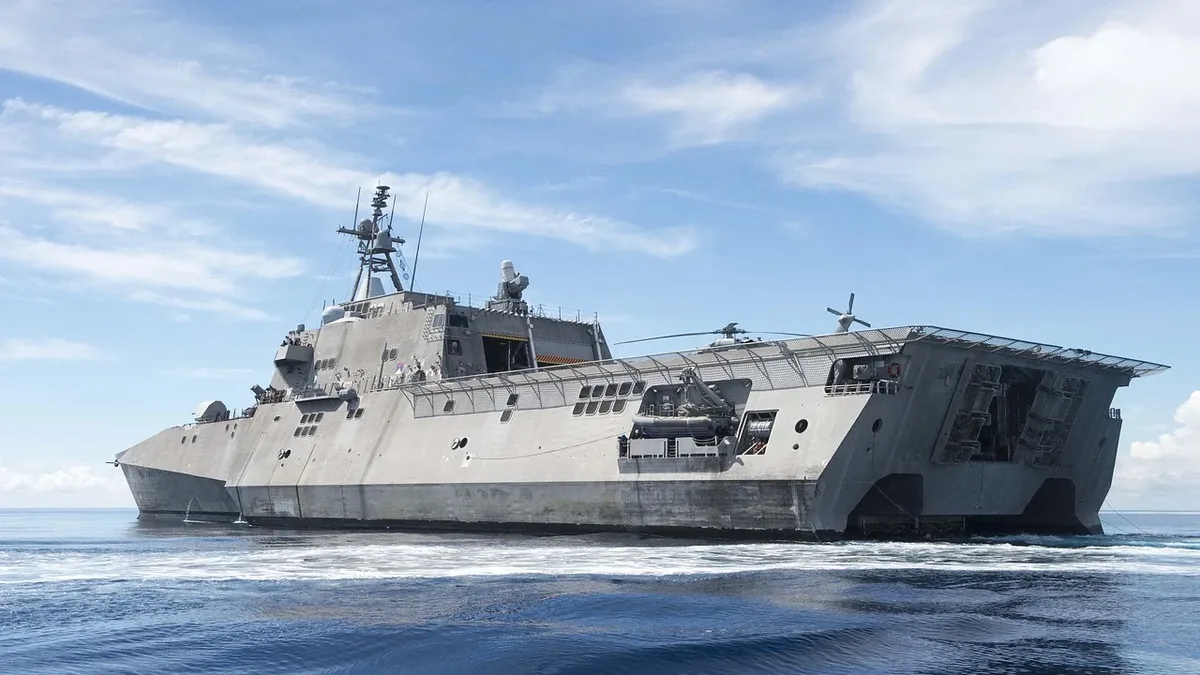
The Indian Navy wants a new long-range strike weapon for its ships. It has issued a Request for Information (RFI) to acquire a Medium Range Loitering Munition system, designated LM(MR).
The service envisions this as a universal system for hitting both maritime and land-based targets. It must operate from naval vessels and shore-based vehicles.
Key Performance Requirements
The RFI outlines demanding specifications for the new weapon. It calls for an operational range greater than 1,000 kilometers. The munition must also loiter for over nine hours while flying faster than 75 knots.
Other key specifications include:
| Specification | Requirement |
|---|---|
| Operational Range | >1,000 km |
| Endurance & Speed | >9 hours at >75 knots |
| Flight Ceiling | Up to 15,000 feet |
| Maximum Length | 2.5 meters |
| Wingspan | 3 meters |
The system requires a modular design with a primary stabilized electro-optical/infrared seeker. This sensor would provide intelligence, surveillance, and reconnaissance data as well as terminal guidance for striking targets. The munitions will be canister-launched and use radio frequency and satellite datalinks for control. Mission control units must be able to manage up to ten munitions at once. They must also allow seamless hand-off of control between ship and land stations. The weapon must handle autonomously even in environments where global navigation satellite signals are denied.
These metrics suggest a system similar in size and propulsion to the Iranian Shahed-136, which typically uses a piston engine.
Procurement and Industrial Strategy
The navy plans to procure the system under India's strict indigenous manufacturing categories. The RFI specifies the 'Buy (Indian-IDDM)' or 'Buy (Indian)' frameworks. The IDDM category requires a platform that is indigenously designed, developed, and manufactured. The 'Buy (Indian)' category is slightly more flexible. It allows foreign original equipment manufacturers to partner with local Indian firms through joint ventures or technology transfer agreements.
This move fits a broader strategic push. A 2022 Ministry of Defence statement confirmed plans to field containerized missile systems and loitering munitions across land and naval platforms. A separate 2023 RFI for Mine Countermeasures Vessels also mentioned requirements for such containerized payloads.
India's armed forces have used loitering munitions before but lack a system with this reach. They have operated the Israel Aerospace Industries Harop, which is produced locally by Adani Defence under the name Agnikaa. It was reportedly used during Operation Sindoor in 2025. However, India currently has no operational land- or sea-based loitering system with a 1,000 km range.
Domestic and Regional Context
Several Indian defense companies are already developing long-range platforms that could be adapted for naval use. NewSpace Research & Technologies is working on the Sheshnaag 150, which has already undergone flight testing. A partnership between CSIR-NAL and Solar Industries is focusing on a system featuring an indigenous NAL Wankel engine. Other potential contenders include Cingularity Aerospace, IG Drones with its KAL UAV, and VEM Technologies with the Chaser.
The regional security landscape is also a factor. The Pakistan Navy demonstrated its own Mudmair loitering munitions during naval drills in 2026. Conflicts in regions like the Black Sea and the Persian Gulf have heightened global interest in naval loitering weapons. According to the source, the Indian Navy is eager to acquire these systems. They offer a more flexible and potentially cost-effective alternative to the service's primary strike weapon, the BrahMos supersonic cruise missile, which is expensive and carried in lower numbers aboard ships.