Operation PULPO Dismantles Pacific Threat Networks
A combined effort between the US and Ecuadorian forces has disrupted criminal networks operating in the Eastern Pacific, targeting illicit offshore fuel supplies and high-tech command and control assets.
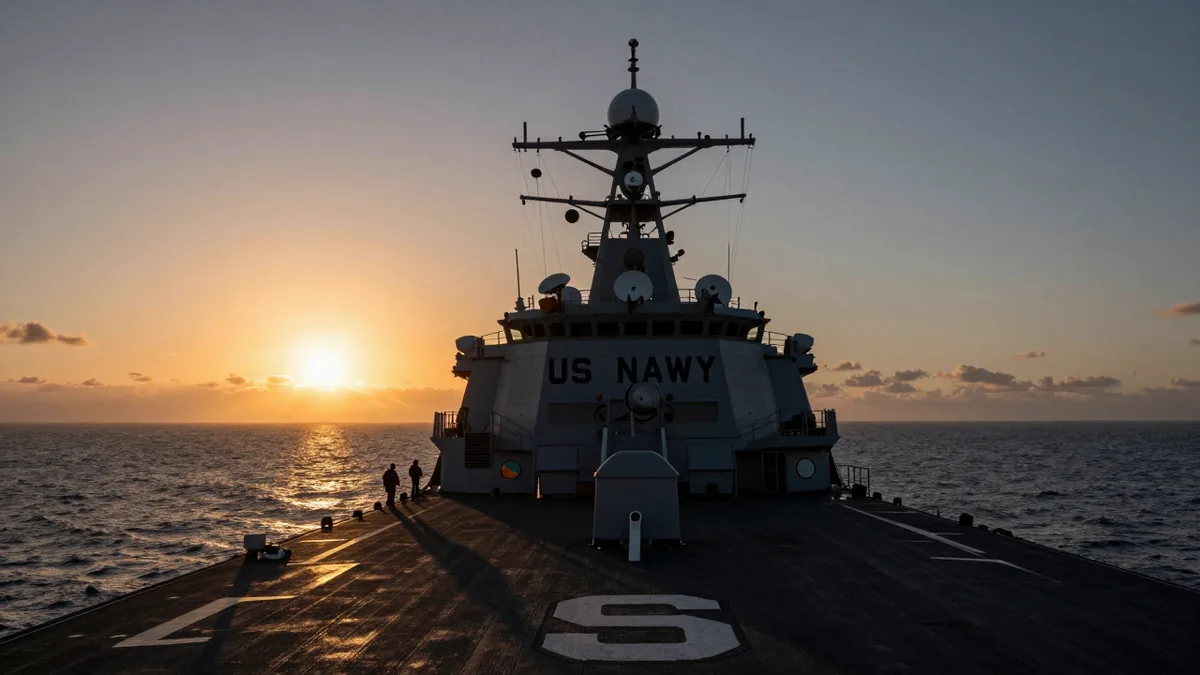
The maritime transit zones of the Western Hemisphere are witnessing a new era of defense, as regional partners and the US work together to disrupt transnational threat networks.
This proactive approach was fully demonstrated during Operation PULPO, a combined effort that synchronized US capabilities with the sovereign interdiction authority of Ecuadorian forces to disrupt criminal networks operating in the Eastern Pacific.
The operation relied on the unique capabilities of Joint Interagency Task Force South (JIATF-S), headquartered in Key West, Florida. JIATF-S is a multi-agency and multinational coordination hub that monitors a vast 42-million-square-mile Joint Operating Area spanning the Atlantic, Caribbean Sea, and Eastern Pacific.
During Operation PULPO, this intelligence-sharing framework focused on disrupting a critical logistics capability used by threat networks, including Foreign Terrorist Organizations (FTOs): illicit offshore fuel supplies. In Ecuador, highly subsidized domestic fuel intended to support local industries is illegally diverted by criminal organizations to sustain maritime smuggling operations.
By targeting this illicit fuel network, Operation PULPO delivered a crippling blow to the operational reach of criminal maritime networks, thwarting attempts to resupply go-fast vessels traveling from South America toward Mexico.
A key component of this operation was the deployment of a Ship Special Mission (SSM) platform. Serving as a forward-deployed, long-endurance mothership in international waters, the SSM enabled Ecuadorian tactical teams to remain positioned hundreds of miles offshore for extended periods.
This operational model successfully leveraged US sensor reach with Ecuador’s sovereign authority to conduct interdictions, allowing partner forces to act rapidly on information developed through the multinational detection and monitoring network.
According to an officer involved in the operation, “the combined SSM, military detachment, and Ecuadorian team showed seamless synergy. The Ecuadorian team’s integration and unmatched professionalism working alongside the platform was the key success factor.”
One of the operation’s early interdictions demonstrated how this coordination worked at sea. JIATF-S aerial assets detected a commercial fishing vessel suspected of acting as a mobile refueling mothership for two go-fast vessels. Ecuadorian forces launched from the SSM platform and closed the distance to conduct simultaneous boarding actions.
Later in the deployment, coordination between a maritime patrol aircraft (MPA) and an unmanned aerial system (UAS) enabled Ecuadorian forces to intercept an advanced, three-engine go-fast vessel carrying 30 jugs of illicit fuel. During the boarding, the Ecuadorian team discovered an active commercial Starlink satellite internet terminal that the crew used to receive real-time, encrypted routing updates from shore-based coordinators.
The operation concluded with the interception of a commercial towing vessel pulling a flotilla of five associated pangas. Ecuadorian forces secured the vessels and recovered 900 gallons (about 3,400 liters) of unreported, illicit fuel linked to regional smuggling routes.
By using the advanced Artificial Intelligence and Machine Learning (AI/ML) capabilities at JIATF-S to map and predict anomalous routing patterns, Operation PULPO demonstrated how innovative technology can be paired with partner nation interdiction efforts to secure the hemisphere.
## Operation PULPO Key Statistics
| **Item** | **Value** | | --- | --- | | Joint Operating Area size | 42 million square miles | | Number of allies and partner nations | 21 | | Type of fuel recovered | Unreported, illicit fuel | | Quantity of fuel recovered | 900 gallons (about 3,400 liters) | | Number of go-fast vessels intercepted | 3 |
## The Future of Maritime Security
The success of Operation PULPO serves as a decisive operational blueprint for JIATF-S’ next phase of Campaign MARTILLO. By denying threat networks fuel as their primary logistical currency and high-tech command and control assets such as Starlink, regional partners have proven that the Eastern Pacific transit zone is no longer a permissive environment for lawlessness.
This collaborative triumph underscores the power of regional intelligence coordination when paired with the robust, sovereign action of hemispheric allies and partners. Moving forward, the joint force stands ready to expand and refine this forward-deployed model, sending an unmistakable message to adversaries that the collective resolve to secure the hemisphere is absolute, uncompromising, and enduring.