Pentagon warned against stockpiling obsolete
A senior officer argues that mass-producing and stockpiling drones risks creating vast inventories of useless equipment as adversaries adapt, urging a
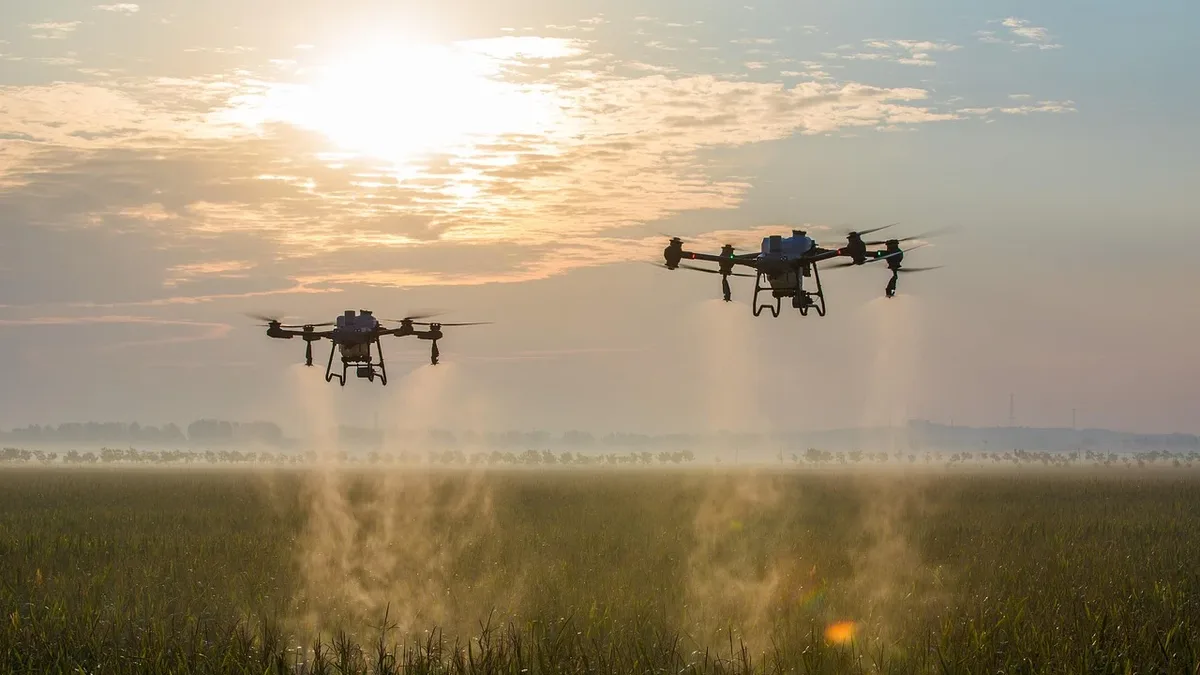
The US Department of War risks wasting billions by stockpiling drones that could be rendered obsolete before they are ever used, according to a senior officer. Colonel Dustin Thomas, Commander of the Defense Contract Management Agency's Unmanned Systems - Experimental Command (US-X), warns that the traditional focus on low unit cost is a dangerous proxy for combat value in an age of rapid technological change.
Colonel Thomas uses a stark example to illustrate the problem. If the Pentagon buys 100,000 drones for $1,000 each but an adversary develops an effective countermeasure after only 30,000 are used, the cost per useful unit soars. The remaining 70,000 drones become a liability, incurring storage and logistics costs for no combat return. This breaks the long-standing industrial-age assumption that lower unit cost automatically means greater combat power per dollar spent.
The End of the Industrial Age Model
For most of history, military production relied on four principles to scale: standardization, specialization, synchronization, and certification. These maximized repeatability, making each additional tank, bomb, or aircraft cheaper to produce. Unit cost became the key metric. Thomas argues this model is now outdated.
We are in a new manufacturing revolution defined by artificial intelligence, design-independent tools like 3D printers, and digital engineering. AI can design small aircraft in minutes. Universal fabrication tools can produce nearly infinite shapes without retooling. Digital engineering synchronizes design changes instantly across the entire process.
Together, these technologies enable design, build, verification, and fielding in days or weeks, not years. In the next major war, the speed of adaptation will itself be a decisive warfighting capability. However, Ukraine demonstrates that adversaries can adapt just as quickly, shrinking the useful lifespan of any fixed weapons design.
Adapting Faster Than the Enemy
The new core question is how to avoid fielding obsolete equipment while forcing adversaries into obsolescence. Thomas points to initiatives like 'Game of Drones' as a model. In these competition-style events, companies from different sectors collaborate to solve operational problems rapidly. In one case, a sensor maker for Nintendo controllers teamed with an aircraft designer to create a new navigation tool for GPS-denied environments using Earth's magnetic field.
Major exercises are also testing these concepts. The Rim of the Pacific international maritime exercise (RIMPAC 2026) featured what the Navy called the largest advanced manufacturing demonstration in Department of War history, proving rapid, in-theater drone manufacturing is possible. The tools for adaptive manufacturing are already entering war plans.
Rethinking Acquisition and Logistics
Operational obsolescence occurs when changes in threat, technology, or tactics destroy a system's combat value. The cost is not just the discarded hardware but also the tied-up logistics, storage, manufacturing capacity, and lost opportunities.
Thomas argues acquisition leaders must stop asking, 'How cheaply can we build another drone?' and start asking, 'How much combat value will this production lot deliver before it needs redesign?' Industry incentives should reward the ability to insert new technology and adapt at speed.
Mass production remains vital for components like micro-electronics where repeatability is key. For larger structures, however, new processes allow decision-makers to preserve optionality in designs for fast systems integration. Manufacturing must become part of the concept of operations. Exercises should test the full cycle: encountering a battlefield problem, integrating new tech, redesigning the weapon, manufacturing it, and delivering it to the fight.
While drones will be needed in munitions-like quantities, they cannot be stockpiled like traditional shells. Thomas concludes the military must instead stockpile components and flexible manufacturing capacity to build, integrate, and adapt quickly. The alternative is to stockpile obsolescence.