Roketsan Tests Ground-Launched ÇAKIR Missile
Roketsan conducted the first public ground-launch tests of its ÇAKIR cruise missile from a mobile launcher against land and sea targets on August 28.
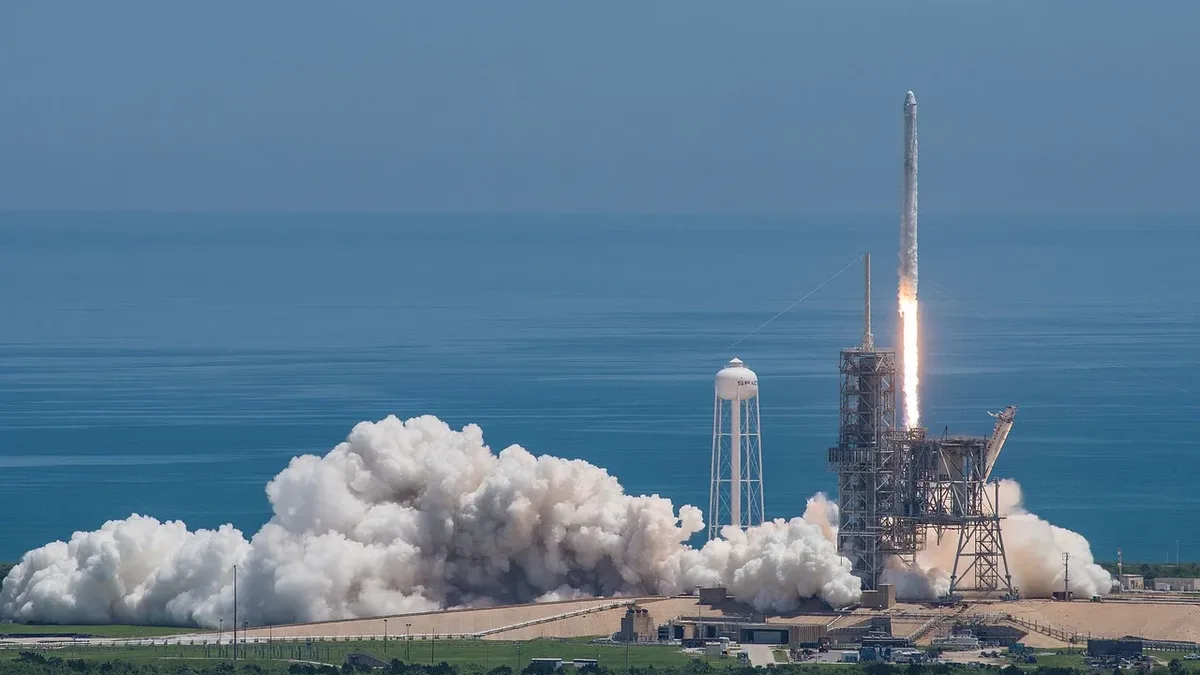
Turkish missile manufacturer Roketsan has conducted the first publicly announced ground-launch tests of its ÇAKIR cruise missile. The company fired the weapon from a mobile land-based launcher against separate land and maritime targets on 28 August.
In a statement, Roketsan said two ÇAKIR missiles were launched in separate tests and struck their respective targets directly. The company did not disclose the test location, engagement ranges, target types, flight profiles, or the detailed configuration of the launcher. No detailed telemetry from either firing was released.
The manufacturer has not indicated whether the launches formed part of a formal qualification campaign or a customer demonstration. Such details are relevant for assessing the maturity and intended fielding of the land-based configuration.
This event expands the publicly demonstrated launch options for ÇAKIR beyond its earlier air-launch trial. In May 2023, a Bayraktar Akıncı unmanned combat aerial vehicle (UCAV) fired a ÇAKIR during the missile’s first flight test. That launch, conducted from an altitude of 7,000 metres according to contemporary Turkish media reporting, also marked the weapon’s first demonstrated use of Kale Arge’s KTJ-1750 turbojet engine.
Missile Specifications
Roketsan unveiled the ÇAKIR family in March 2022 as a modular missile programme intended for air, naval and land platforms. The original concept included fixed- and rotary-wing aircraft, UCAVs, unmanned surface vessels, tactical wheeled vehicles and surface combatants. A ground-launched configuration requires a launch booster, after which the cruise missile’s turbojet takes over.
The manufacturer has previously stated key specifications for the weapon. These remain manufacturer-stated capabilities; no further technical data from the ground tests has been released.
| Feature | Specification |
|---|---|
| Weight (without booster) | About 275 kg |
| Weight (with booster) | About 330 kg |
| Advertised Range | Exceeding 150 km |
| Primary Targets | Surface ships, coastal objectives, land targets |
ÇAKIR is designed for attacks against surface ships, coastal objectives and land targets. Its guidance architecture combines inertial navigation, anti-jam satellite navigation and an altimeter. Roketsan has also described terminal seeker options including imaging infrared, radio-frequency and hybrid arrangements across the wider family. The current test announcement specifically identifies a next-generation imaging infrared seeker.
Other stated features include a two-way datalink for in-flight target updates, re-attack decisions and mission abort. The missile also has the ability to fly terrain-masking routes over land or sea-skimming profiles over water. Roketsan has promoted coordinated employment by multiple missiles.
Export and Naval Applications
The programme has a significant export dimension. Roketsan’s chief executive said in July 2023 that an export agreement for ÇAKIR had been signed before the missile had entered Turkish service, without naming the customer. Qatar and Indonesia are two publicly known customers of the system.
In an August statement reported by Turkish defence outlet SSB Bülten, Indonesian Ambassador to Türkiye Achmad Rizal Purnama said that Indonesia had procured ÇAKIR missiles and other missile systems from Türkiye. He also referred to a joint venture between Roketsan and an Indonesian company, with plans for a rocket and missile production facility in Indonesia. The announcement did not disclose the number of missiles ordered, contract value, delivery status, intended service branch, or the exact scope of the planned production arrangement.
During the Indo Defence 2025 exhibition, privately owned shipbuilder Republik Palindo, part of the Republikorp defence industry holding in Indonesia, exhibited a fast attack craft project fitted with ÇAKIR. This aligns with potential naval applications, which can be tracked in our fixtures for platform integration developments.
For naval users, the ground-launch demonstration points to a potential coastal-defence application alongside ship-, unmanned-surface-vessel- and air-launched employment. It does not, however, confirm an operational deployment or a procurement decision by the Turkish Armed Forces. Further tests will be needed to establish how the boosted land-based configuration performs across its full target set and range envelope, a development that will be reflected in future stats on missile system performance.