F-35 lifetime cost falls below $2 trillion
The Pentagon's latest estimate for the F-35 fighter's total lifecycle cost has dropped to $1.93 trillion, even as its acquisition price has risen to $536.3
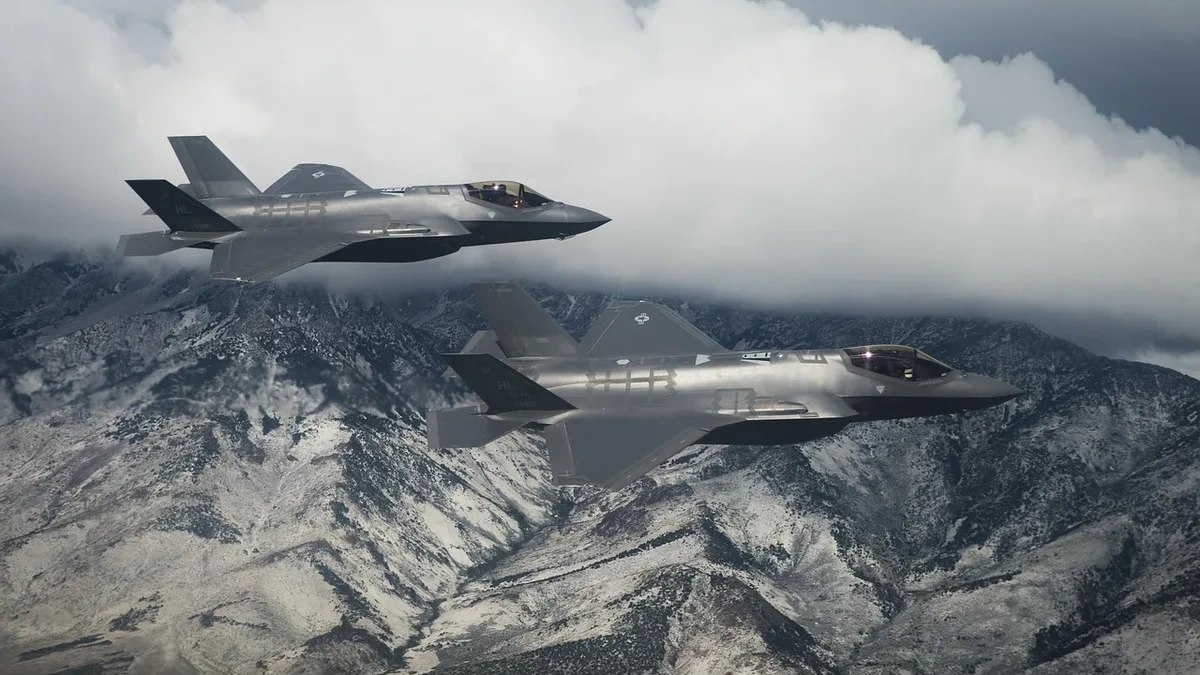
The estimated cost to buy the F-35 Joint Strike Fighter has increased, but the Pentagon now projects it will spend less overall on the stealth jet. According to a 2025 modernized selected acquisition report (MSAR), total acquisition costs are now $536.3 billion, up from $485.2 billion in 2024.
However, the projected cost to operate the aircraft over its entire lifespan has fallen slightly. The new estimate is roughly $1.93 trillion, which is lower than the $2.06 trillion figure listed in the 2024 report. All valuations account for inflation.
Acquisition Costs Rise
The F-35 Joint Program Office (JPO) confirmed the rising acquisition cost. A JPO spokesperson stated that about $19 billion of the $51 billion increase is due to higher development costs for the aircraft and its engine. The remaining $32 billion stems from greater procurement costs.
These procurement costs include more spare parts aimed at boosting readiness rates and buying an advanced radar. Delays for that radar have forced the Pentagon to accept aircraft without the nose-mounted sensor.
The fighter is built by Lockheed Martin, with its engine supplied by RTX subsidiary Pratt & Whitney. Lockheed Martin said the latest report shows the program moving into full-rate production and resuming high-volume deliveries. "It also shows that the hard work has shifted from proving the basic aircraft to executing major modernization, improving fleet readiness and controlling long-term sustainment and integration costs," the company stated.
Lifecycle Estimate Dips
The overall lifecycle estimate is an educated guess for costs over the next six decades. It accounts for fuel, staffing, sustainment, and future upgrades. The JPO spokesperson confirmed the program's lifecycle costs have fallen beneath $2 trillion. The jet had previously surpassed that figure in a 2024 Government Accountability Office review.
Costs fluctuate due to factors like "affordability initiatives" and changes in material and manpower costs. Lifecycle estimates can change any year with fresh assumptions. The most recent MSAR uses data from 2025, which omits the high tempo of F-35 operations in the ongoing war against Iran.
Total estimated lifecycle costs are also variable because planners constantly adjust how long the jet will fly. The 2023 MSAR found officials expected the F-35A variant to operate until 2088. The most recent report projects F-35A operations will continue until 2083.
Ongoing Modernization Efforts
The Pentagon is proceeding with several enhancement programs for the F-35. One set of upgrades is meant for the fighter's engine, while another will deliver a new power and thermal management system to address cooling challenges.
A separate, troubled modernization program known as Block 4 will add a suite of capabilities. Block 4 is over budget and years behind schedule. Its computing backbone, Technology Refresh 3, has still not been certified for combat. This has relegated jets delivered over the past two years to training duties.
The F-35 comes in three variants operated by different services. The conventional takeoff and landing F-35A is used by the Air Force. The short takeoff and vertical landing F-35B is for the Marine Corps. The carrier-capable F-35C variant is operated by the Navy. The stealth fighter currently has 19 international customers in addition to the United States.
The recent MSAR contends that the commonly reported $2 trillion price tag "doesn't come close to telling the whole story." It states, "The growing global demand speaks for itself. The F-35's value proposition is unmatched."