Ukraine's Long Neptune Missiles Cripple Russian Warships
Ukrainian forces struck three Russian Black Sea Fleet vessels in Novorossiysk using Long Neptune cruise missiles, inflicting severe damage and degrading
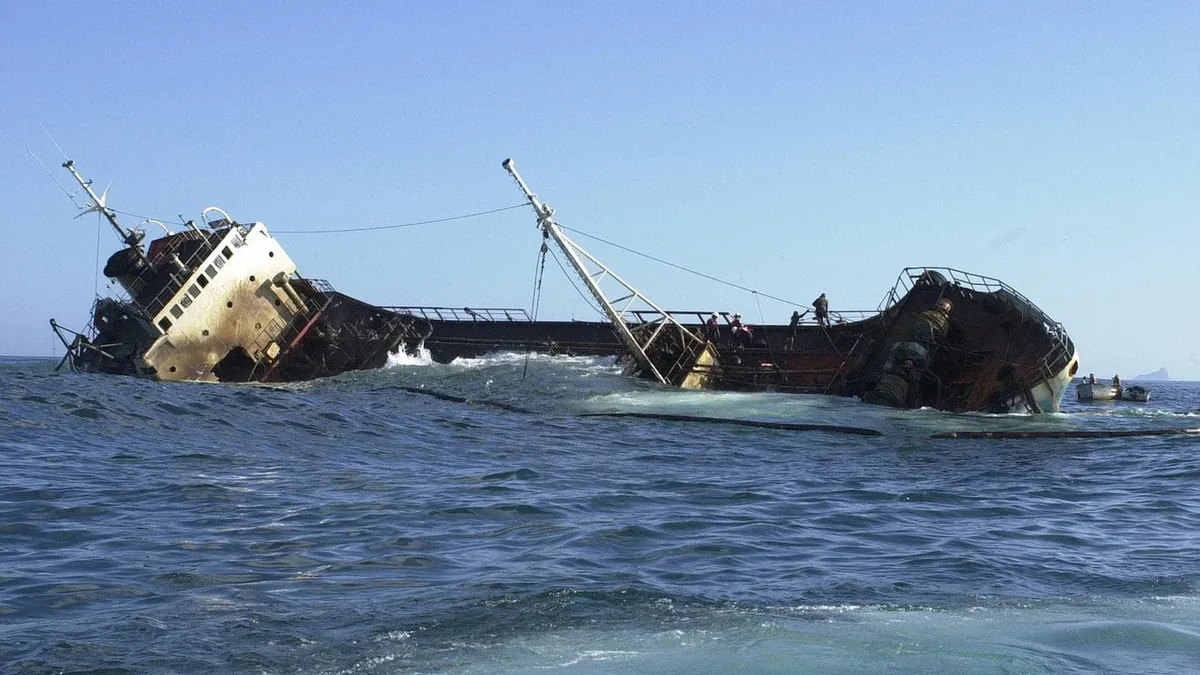
Ukrainian naval forces struck three Russian warships in Novorossiysk on September 9th using Long Neptune cruise missiles. The attack targeted the frigates Admiral Essen and Admiral Makarov, along with a Buyan-M class corvette.
Satellite imagery published a day later by Exilenova+ confirmed the strikes. The damage appears most severe on the Buyan-M corvette. Everything aft of its superstructure, including its vertical launch system cell bank, shows extensive fire damage and severe structural collapse, with debris scattered over the stern.
Both Project 11356R Grigorovich-class frigates sustained moderate to severe damage to their forward sections. The damage is concentrated near their vertical launch system banks and forward superstructures. This likely renders both vessels incapable of employing their surface-to-air and surface-to-surface munitions. Both ships now appear in visibly worse condition than after previous Ukrainian drone raids in mid-August.
This latest round of strikes inflicted significantly more damage. Analysts attribute this to the heavier and more destructive nature of missiles compared to the strike drones used previously.
Degrading Russia's Missile Capacity
The strikes have put at least four of the Russian Black Sea Fleet's ten surface cruise missile carriers out of action. Most of those four sustained heavy or moderate damage. The attack demonstrates that Ukrainian-built cruise missiles like the Long Neptune can hit maritime targets roughly 400 kilometers from the front lines. It also shows Ukraine possesses the intelligence and reconnaissance capability to target moving assets.
This development dramatically increases the threat to the Black Sea Fleet. The Neptune missiles add a high-end, devastating munition to Ukraine's arsenal. They are available in larger quantities and with fewer restrictions than donated Western munitions like Storm Shadow.
The overall operational status of Russia's Kalibr cruise missile carriers is now limited. Out of a potential total of 17 ships across the Caspian and Black Seas, only 8 remain active.
| Vessel Type | Potential Total | Currently Active | Out of Service (Damaged) |
|---|---|---|---|
| Grigorovich-class frigate | 3 | 1 | 2 |
| Buyan-M class corvette | 4 | 3 | 1 |
| Karakurt-class corvette | 3 | 2 | 1 |
| Kilo/Improved Kilo-class submarine | 7 | 5 | 2 |
Six of nine vessels in the Black Sea are out of service due to damage. The frigate Grigorovich and two other Kilo-class submarines are also blocked from re-entering the Black Sea due to the closure of the Bosporus straits.
The Long Neptune's Debut
These strikes mark the first known instance of a Long Neptune missile hitting a ship. Previous usage was primarily against land-based targets in occupied Ukraine and Russia. The Long Neptune is an improved, larger iteration of the original R-360 Neptune anti-ship cruise missile. Both missiles are designed and manufactured by Ukraine's Luch Design Bureau.
In early 2022, two original Neptune missiles sank the Slava-class cruiser Moskva. That event marked the first Russian maritime casualty of the full-scale invasion and the loss of the Black Sea Fleet's flagship. Following that success, Luch reengineered the Neptune for optimized use against land targets throughout 2023. The War Zone reported the missile received a new guidance package featuring an improved inertial navigation system, GPS-based guidance, and a new terminal seeker.
Luch subsequently introduced the Long Neptune variant. It is designed to extend the range of existing Neptune variants from roughly 300-360 kilometers to over 500 kilometers. The extended range was accomplished by enlarging the missile and adding "bulges" or additional fuel tanks towards the front. This requires a noticeably larger transport erector launcher. The variant entered service in late 2025, forming the heavier edge of Ukraine's strike munitions alongside the large, long-range FP-5 Flamingo.