U.S. Special Forces Test Helicopter Landing on Unmanned
The U.S. Army's 160th Special Operations Aviation Regiment has successfully landed an MH-47G Chinook on an autonomous Sea Machines barge for the first
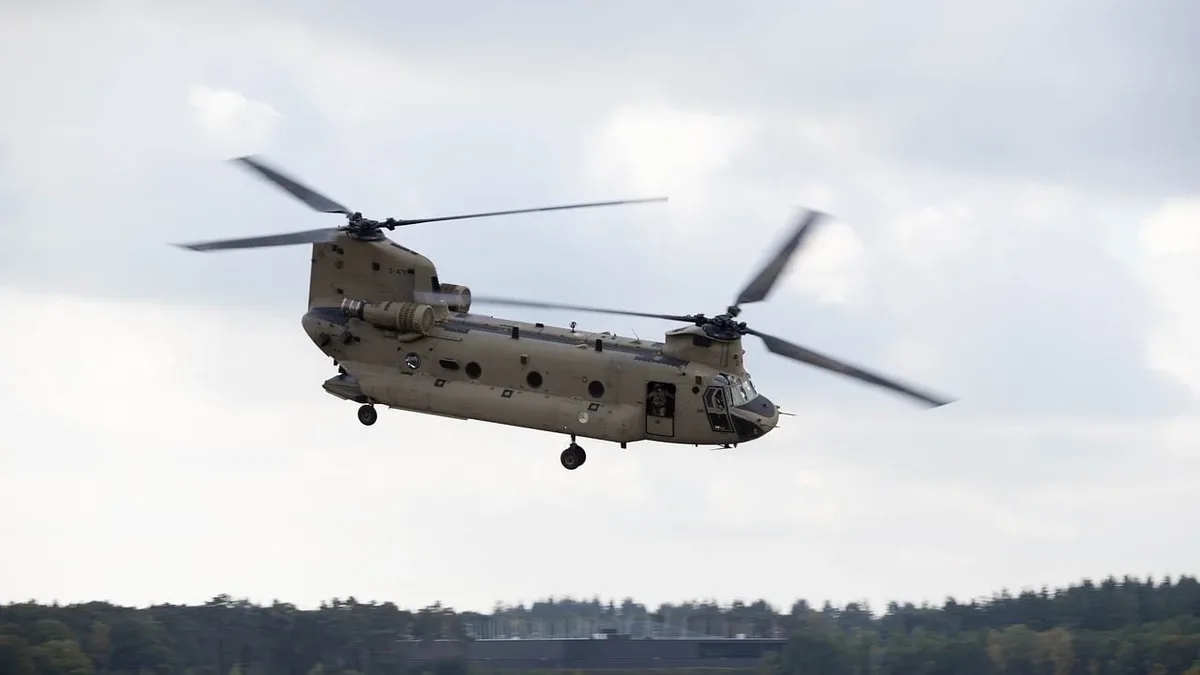
The U.S. Army's 160th Special Operations Aviation Regiment (SOAR) has conducted the first publicized landing and replenishment operation of an MH-47G Chinook helicopter on an unmanned, autonomous barge. According to Sea Machines Robotics, the company behind the technology, this test advances capabilities for naval logistics and the integration of autonomous systems with elite forces.
Sea Machines stated that these autonomous barges can also be used to replenish surface vessels and shore installations. The flight test represents a significant step in bringing rotary-wing aviation back into contested maritime environments by providing flexible, forward operating points.
The SM300 Autonomous System
The capability is enabled by the SM300 autonomous conversion kit. Sea Machines first received a notice to manufacture and trial this system in early 2021, with $3.1 million dedicated to its development and deployment. The SM300 uses common architecture, hardware, and software to convert a wide range of manned vessels into long-range autonomous platforms.
The company has demonstrated the system on vessels of vastly different sizes. These range from barges large enough to accommodate the U.S. Army's largest helicopters down to vessels roughly the size of a standard rigid hull inflatable boat (RHIB), which is about 20 to 30 feet long.
| Vessel Type | Capability Demonstrated |
|---|---|
| Large Barge | Landing for largest U.S. Helicopters (e.g., MH-47G Chinook) |
| RHIB-sized vessel (~20-30 ft) | Autonomous operation |
Expanding Helicopter Reach and Armament
A major driver for this technology is the need to rearm helicopters and improve operational flexibility. The proliferation of short-range weapons and interceptor drones has made frontline operations increasingly risky. Autonomous barges could provide critical logistics support for Army attack and transport helicopters that otherwise lack the range or a place to land in forward areas.
Part of this effort involves integrating new, longer-range weapons. For instance, Naval News reported that munitions like the L3Harris Red Wolf cruise missile, which weighs 500 pounds or less, have been tested on Marine Corps AH-1Z Viper attack helicopters. This weapon reportedly has a range of 200 nautical miles.
There is also a parallel push to use helicopters as launch platforms for drone swarms. The Marine Corps and U.S. Army are testing concepts for helicopters to carry large numbers of FPV or smaller utility drones. In a related development covered by The Defense Post, an Anduril Altius 700M attack drone was test-fired from an Army MH-60M Black Hawk, offering a medium-range, beyond-line-of-sight capability.
Counter-Drone Upgrades
U.S. Military branches are actively upgrading their helicopters to counter enemy drones. Several platforms have received the capability to employ Advanced Precision Kill Weapons System II (APKWS II) guided rockets as a low-cost option for hunting unmanned aerial systems (UAS).
The integration of the SM300 system with an elite unit like the 160th SOAR signals a willingness to adopt new technologies for complex special operations. Sea Machines has worked with the Department of Defense to bring this autonomous barge project to fruition, after years of development that remained largely out of the public eye.