France urged to order second carrier by 2029 for permanent strike capability
A French parliamentary report urges ordering a second next-generation aircraft carrier by 2029 to ensure a permanent Carrier Strike Group presence at sea, addressing gaps from the Charles de Gaulle's maintenance and its retirement around 2038.
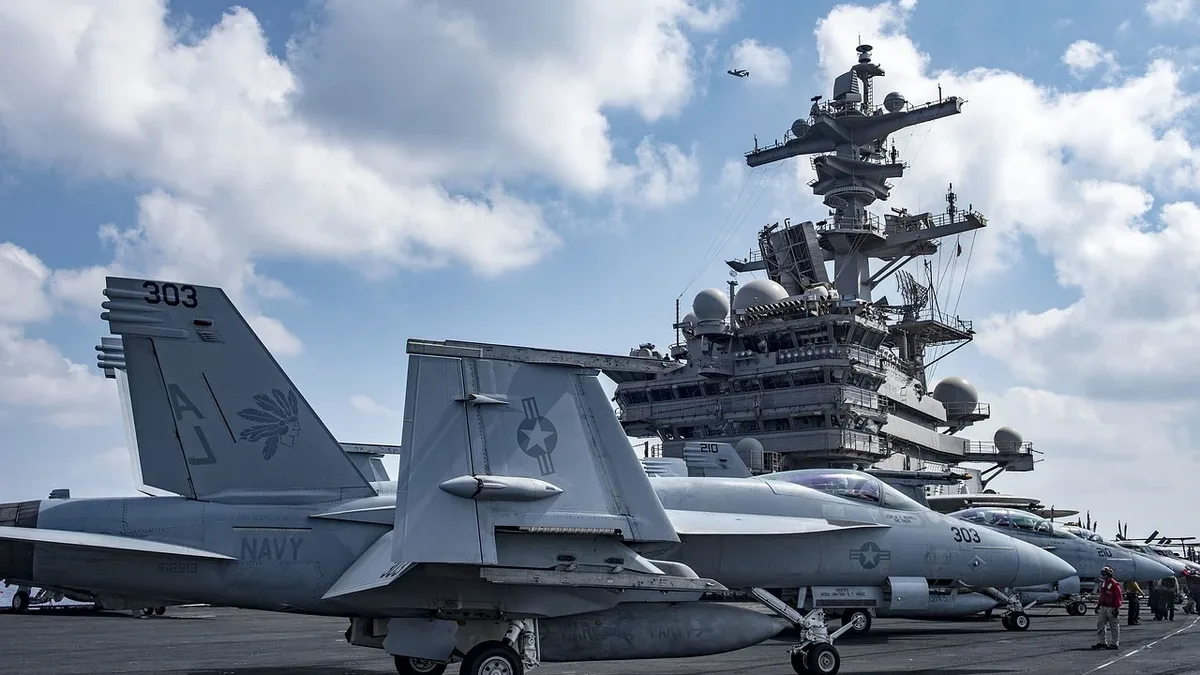
France faces a critical decision on ordering a second aircraft carrier by 2029 to sustain sovereign carrier strike capability beyond the retirement of the Charles de Gaulle. Lawmakers warn that failing to act will leave the Marine Nationale without a continuous carrier presence, directly impacting France's strategic autonomy and naval power projection.
Yannick Chenevard, the parliamentary rapporteur, has recommended ordering a second next-generation nuclear aircraft carrier. "Doing so would ensure a permanent Carrier Strike Group presence at sea," he said. The Charles de Gaulle will retire around 2038 when the new carrier, the France Libre, enters active service. The current carrier's operational availability is approximately 63 percent, a structural constraint that a second hull is needed to overcome.
Carrier Lifecycle and Maintenance Constraints
The immediate pressure point is the Charles de Gaulle's planned 2027-2028 major overhaul. This refit will remove France's only sovereign carrier platform for approximately 18 months, with a targeted operational return in March 2029. The navy currently relies solely on this nuclear-powered ship, and its routine and major maintenance cycles create periods without carrier strike capability. A 2029 order for a sister ship is proposed to offset maintenance schedules between the two future vessels.
Procurement Options and Cost Efficiency
The report firmly dismisses extending the life of the Charles de Gaulle. A life extension would require a fourth major technical refit, including refueling its nuclear cores, at a cost of two billion euros for only a few extra years of service. Technical hurdles are massive, involving permanently altered reactor vessels and hull corrosion.
Building a direct sister ship to the France Libre is presented as the cost-effective choice. It would cost roughly 30 percent less than the lead ship since research and development expenses are already covered. Constructing it immediately after the France Libre at the Chantiers de l’Atlantique shipyard in Saint-Nazaire would maximize economies of scale. Inserting civilian cruise ships into the production line would erase these savings.
Operational Requirements and Fleet Integration
The second carrier would necessitate specific new assets, but the report argues existing systems can be leveraged. The French Navy would need to acquire 12 additional Rafale M fighters and two more E-2D Advanced Hawkeye aircraft. Pilots and aircraft can rotate between flight decks. Escort duties could be managed without buying new ships by implementing dual crewing on air defense frigates, a practice proven on the FREMM fleet. Infrastructure costs remain low, as a second dry dock is unnecessary and a second berth in Toulon can be built cheaply during ongoing port upgrades.
Critics argue a second carrier requires duplicating the entire escort fleet, but the report debunks this. Continuous readiness only requires one carrier deployed while the other is in maintenance or training. Lawmakers emphasize that expanding the overall surface fleet to 18 first-rank frigates remains essential for long-term sustainability.
The Next-Generation Carrier: France Libre
The France Libre, named by President Emmanuel Macron in March 2026, will be a substantially larger vessel than its predecessor. It is designed as an 80,000-tonne, 310-meter nuclear-powered CATOBAR carrier, dwarfing the 42,000-tonne Charles de Gaulle. Key specifications and capabilities include:
| Feature | Specification |
|---|---|
| Displacement | 80,000 tonnes |
| Length | 310 meters |
| Beam | 90 meters |
| Propulsion | Two K-22 nuclear reactors, electric motors, three shafts |
| Top Speed | 27 knots |
| Flight Deck | 17,200 sq m, angled, with EMALS & AAG |
| Catapults | Three EMALS electromagnetic catapults |
| Air Wing (approx.) | 30 combat aircraft, 3 E-2D Hawkeyes, 6 NH90 helicopters |
| High-Intensity Sortie Rate | ~60 daily |
| Program Cost | Estimated 10 billion euros |
Hull assembly begins in 2032 in Saint-Nazaire, with commissioning scheduled for 2038. Between 2035 and 2038, the navy will operate both the Charles de Gaulle and France Libre to facilitate crew transfer and training. The new carrier is designed to integrate future systems like unmanned combat aerial vehicles and a Next Generation Fighter.
The 2029 decision connects procurement timing with strategic autonomy. Delaying a sister ship could disrupt industrial continuity, reduce production efficiencies, and leave France dependent on another single-carrier force after the Charles de Gaulle retires. The underlying strategic issue is whether France can generate a carrier strike group when a crisis begins, not only the technical specs of its flagship. Parliamentary debate on the 2029 order will determine France's naval power continuity through 2060.