Russian Satellite Shadows Ukraine-Linked Commercial Radar Satellite
A Russian military satellite performed a close, unapproved rendezvous with a U.S.-operated commercial radar satellite used by Ukraine, holding position just a third of a mile away for over two weeks in what U.S. officials call threatening behavior.
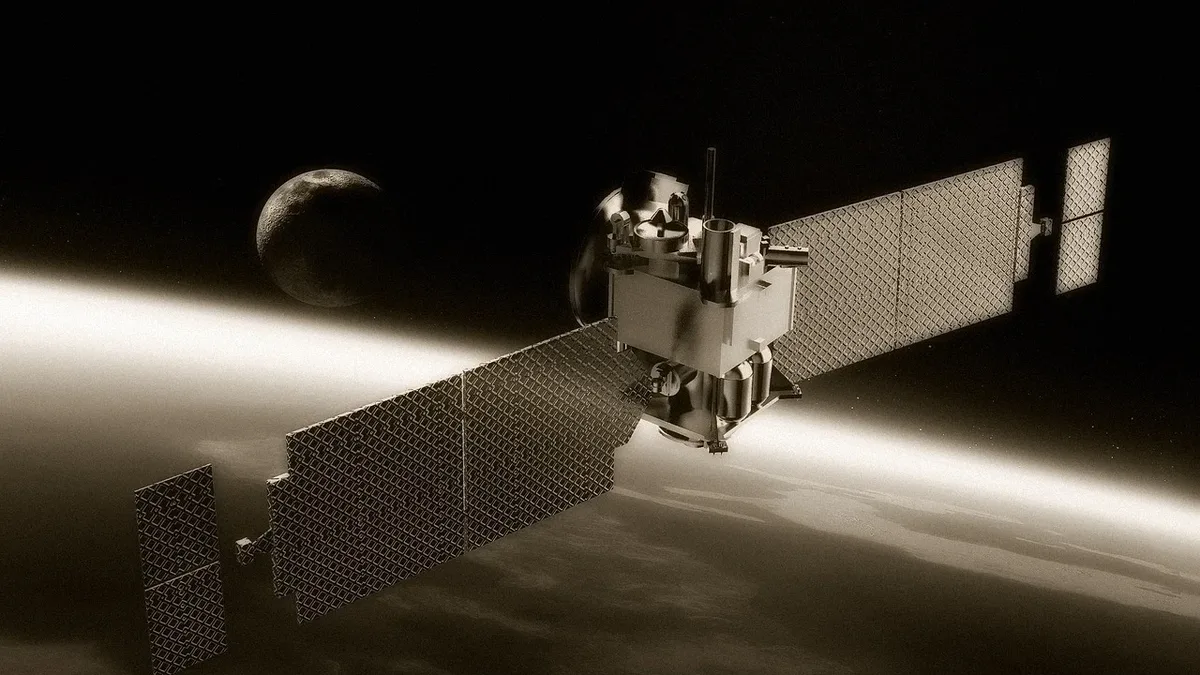
A Russian military satellite conducted an unapproved close approach with a U.S.-registered commercial radar satellite that supplies intelligence to Ukraine. The Russian satellite, Cosmos 2612, spent more than two weeks maneuvering to shadow the ICEYE-X36 satellite, coming within a third of a mile during the weekend of October 17.
Space historian Jonathan McDowell stated this is the first rendezvous in low Earth orbit between two active satellites conducted without one owner’s approval. The encounter was flagged on October 12 by commercial trackers when Cosmos 2612 slid into ICEYE-X36’s orbit roughly 345 miles above Earth. Tracking data from LeoLabs shows the Russian satellite moved from over 200 miles behind its target to roughly 3 miles away on October 15 and 16, before holding that close formation. Both objects travel at about 4 miles per second, making the narrow gap equivalent to extremely tight aircraft formation flying.
ICEYE-X36 is a synthetic aperture radar satellite operated by the American arm of the Finland-founded company ICEYE. It is used for military intelligence, including monitoring troop movements, and has supported Ukraine during the war. Russia adjusted the orbit of its Kosmos 2612 satellite to match the orbital plane and altitude of the commercial spacecraft.
Strategic Context and Escalation
The maneuver occurred amid heightened tensions and a shift in U.S. policy. The Russian satellite pulled back on October 18, two days after President Donald Trump signed an executive order waiving most economic restrictions on Russia. U.S. Undersecretary of State Thomas G. DiNanno called the behavior threatening. Thomas G. DiNanno said: "the country had been 'intentionally maneuvering dangerously close to a commercial satellite, behaviors consistent with on-orbit weapons operations.'"
Moscow has warned since the first year of its full-scale invasion that Western commercial satellites aiding Ukraine could become legitimate military targets. Analysts could not determine if Moscow planned an attack and reversed course or was orbiting nearby for another purpose. Clayton Swope of the Center for Strategic and International Studies suggested Russia could have been doing a dry run for a future attack, or the satellite could have been carrying a weapon like a jammer or laser.
Swope also speculated that Trump's move to ease sanctions "could have been a reason why Putin said, 'You know, now’s not the time to exacerbate tensions specifically with the United States.'" He warned that such menacing satellite moves are a spigot Russia could turn on and off to pressure adversaries. Russia, he added, is going to turn it on again.
The incident shows broader vulnerabilities. A 2025 war-game scenario suggested Washington appears to lack response options if Russia threatened U.S. satellites with a nuclear weapon in orbit. While there is no indication Cosmos 2612 carries a nuclear weapon, no internationally recognized rule exists to determine if such a maneuver is hostile.
Expert Analysis on Intent
Space-security specialists remain divided on the satellite's intentions. The maneuvers, which began on September 30, could enable close inspection, interference with operations, or positioning for a possible anti-satellite attack. Matching another satellite's orbital plane is a significant maneuver requiring substantial fuel but allows for close approach with little additional expenditure.
ICEYE stated it is aware of the situation and tracking it closely and that its constellation architecture is designed for resilience. The company has an agreement with a customer within Ukraine's Ministry of Defence to expand space-based intelligence cooperation, though it has not confirmed that ICEYE-X36 is currently providing direct support. There is no public confirmation that ICEYE-X36 has been damaged or disabled.
The event highlights the growing exposure of commercial satellites to geopolitical tensions. It followed Air Force Secretary Troy Meink’s confirmation that the U.S. has weapons in orbit and the Space Force's selection of two companies to build space-to-space reconnaissance satellites. The incident was tracked by S2A Systems, a space situational awareness operator.
As analysts warn the move could be a prelude to future attacks, the unresolved question is whether Russia will repeat this dangerous maneuver. Clayton Swope said: They prove a point, the West can’t stop me.