KF-21 Boramae inducted into Republic of Korea Air Force
South Korea has inducted its first domestically developed KF-21 Boramae fighter jet into active service, assigning it to the reactivated 156th Fighter
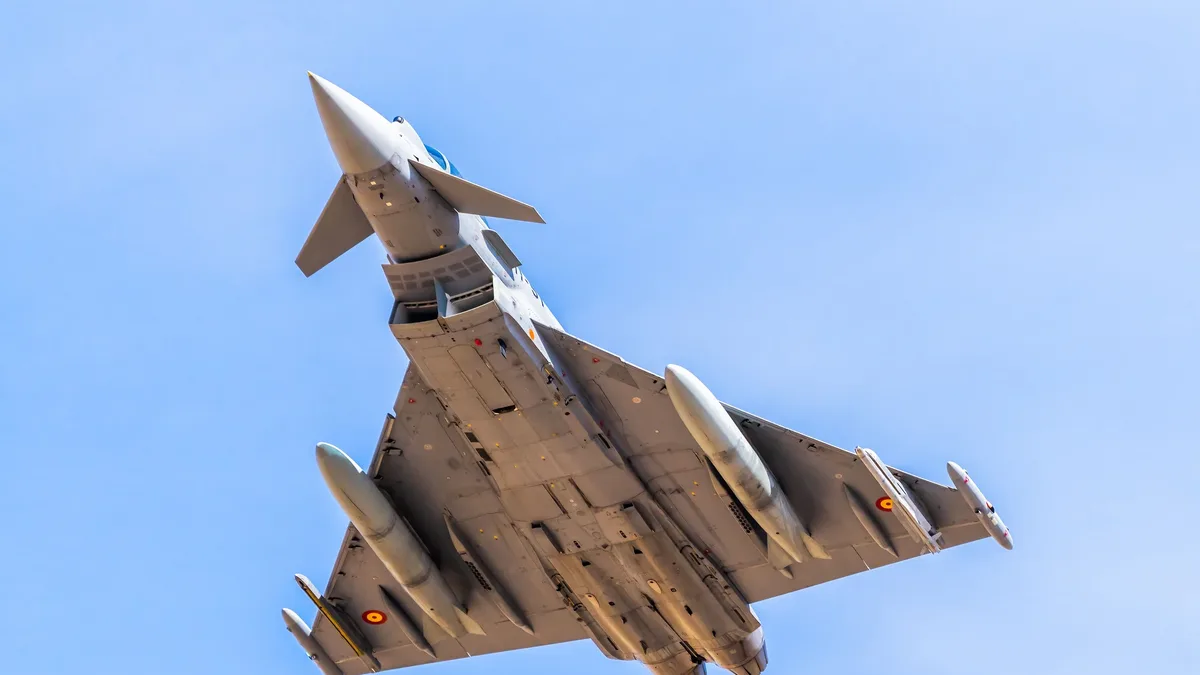
The Republic of Korea Air Force has taken delivery of its first KF-21 Boramae fighter jet and assigned it to the 156th Fighter Squadron for initial operational service. The handover occurred at Korea Aerospace Industries’ plant in Sacheon on Tuesday, with the aircraft flying to its new base at Yecheon the same day. ROKAF Chief of Staff Gen. Son Seok-rak stated the KF-21 has begun flight operations. The service announced the delivery on Wednesday.
Gen. Son Seok-rak said: "The KF-21, born after overcoming countless challenges and obstacles, has been delivered to the Air Force today and has begun its flight operations." The flight to Yecheon Air Base, a distance of about 103 miles, was piloted by one of the first qualified pilots, Major Han Jae-seok, who also signed the acceptance documents. The KF-21 was escorted by an FA-50 light attack jet, a TA-50 trainer, and a T-50 Golden Eagle.
Background
The 16th Fighter Wing’s 156th Fighter Squadron, a former F-4E Phantom unit deactivated in 2012, was reestablished earlier this year to become the first unit to operate the KF-21. It was formally reactivated on June 1 to fly the new fighter.
Programme Details
The KF-21 is considered a 4.5-generation fighter jet positioned between the F-16 and the F-35. Local content in the aircraft is nearly 65%. It flies on two General Electric F414 turbofans, which are assembled in Korea by Hanwha Aerospace under a contract for 240 engines and spares through 2032. Engine localization is near 39%, but because GE owns the core technology, export sales require U.S. Approval. The Defence Acquisition Program Administration is funding a domestic engine effort to reduce this reliance.
The jet will be equipped with a mix of indigenous and Western sensors and weapons. Korean firms built the active electronically scanned array radar, infrared search and track system, electro-optical targeting pod, and radio-frequency jammer domestically after the United States declined to transfer those four core technologies in 2015. Initial armament centers on European MBDA’s Meteor and Diehl’s IRIS-T air-to-air missiles, along with the indigenous Korean Guided Glide Bomb.
South Korea has ordered 40 KF-21s in the initial Block I configuration, which will be used mainly in the air-to-air role. KAI is contracted to deliver these by 2028. The country is also developing the Block II variant, which will expand the aircraft’s air-to-ground capabilities, with a contract for 80 of those precision-strike jets to be delivered by 2032.
| Variant | Primary Role | Quantity | Delivery Target |
|---|---|---|---|
| Block I | Air-to-air | 40 | By 2028 |
| Block II | Precision strike (air-to-ground) | 80 | By 2032 |
Development and Testing
KAI completed the KF-21 flight test program in January. The programme, which traces back to a 2001 proposal, was formally launched in December 2015. Six prototypes flew about 1,600 test sorties across 13,000 test conditions, including aerial refueling and weapons firings. The Defence Acquisition Program Administration reported there were no accidents during testing. Systems development was completed in June 2026, followed by combat suitability certification in May 2026.
Regional Interest
KAI is seeking export orders for the KF-21. Several Southeast Asian nations have expressed interest. Indonesia, the programme’s original risk-sharing partner, is looking to buy the KF-21 directly from South Korea after abandoning local production plans, having stepped back from co-production over payment issues. Malaysia is reportedly evaluating the KF-21, and the Philippines has also shown interest in the program.
Lee Yong-cheol, head of South Korea’s Defense Acquisition Program Administration, called the delivery a historic milestone in achieving self-reliant national defense. The 156th Fighter Squadron will continue flight operations with the KF-21 as South Korea proceeds with deliveries of Block I jets and development of the Block II variant.