South Korea Approves New Stealth Anti-Ship Missile
South Korea's DAPA has approved a 12-year program to develop a new stealthy, long-range anti-ship missile, with an estimated cost of $1.15 billion.
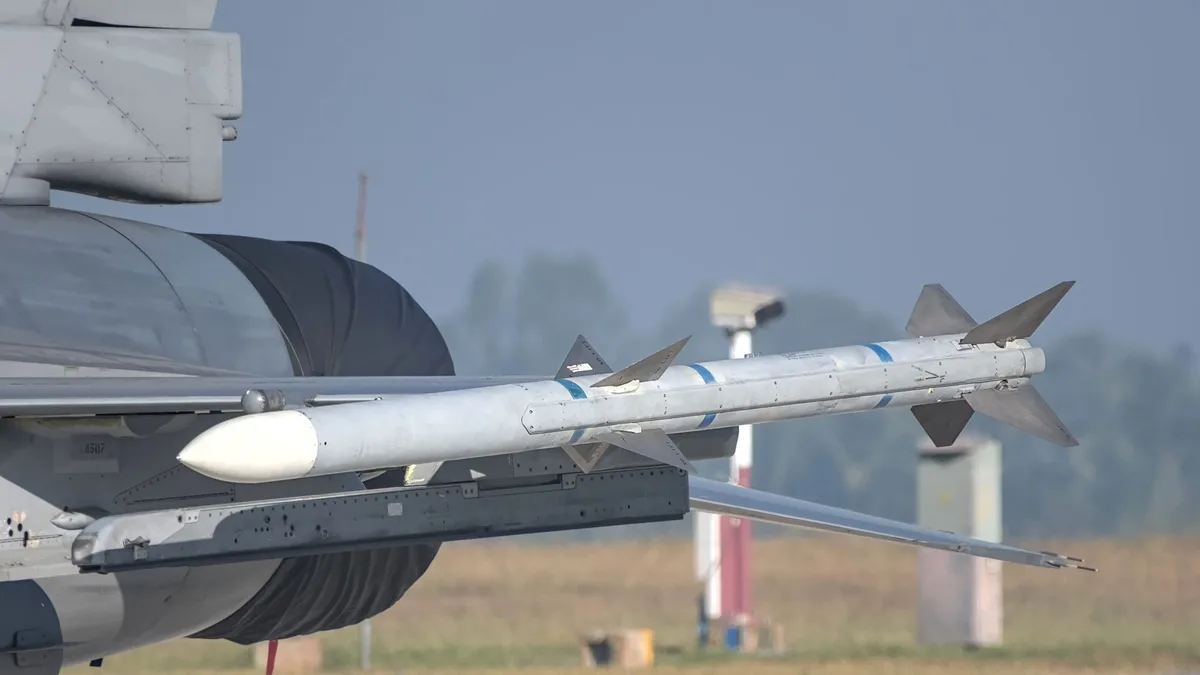
South Korea's Defense Acquisition Program Administration (DAPA) has approved the acquisition strategy for a new long-range, stealth anti-ship missile. The decision, made at the 177th Defense Project Promotion Committee meeting on August 11, 2026, launches a program estimated to cost 1.63 trillion won, or approximately $1.15 billion.
This new weapon, named the Ship-to-Ship Missile-II, is intended to replace the current Haeseong (SSM-700K C-Star) missile in South Korean naval service. The development program is scheduled to run from 2028 through 2033, with production slated to begin around 2034. The missile is expected to be deployed on future KDDX Batch-I and Batch-II destroyers.
Program Objectives and Design
The core objective is to dramatically extend the Republic of Korea Navy's surface strike range. The currently fielded Haeseong missile has an estimated operational range of 150 to 180 kilometers. DAPA has confirmed that the successor missile is designed to roughly double that figure, with public reporting anticipating a range between 300 and 360 kilometers while remaining a subsonic weapon.
To achieve this, the missile will incorporate a low-observable, or stealth, airframe. It will also replace the Haeseong's turbojet engine with a more fuel-efficient turbofan. These design choices point toward a weapon optimized for long-distance engagements and a reduced radar signature, making it harder for enemy defenses to detect and intercept. The Agency for Defense Development (ADD) is expected to lead the development effort, with domestic defense firms building prototypes.
Strategic Drivers and Regional Context
The push for increased range is a direct response to a changing regional maritime threat environment. DAPA officials have indicated that the growing anti-ship missile capabilities of neighboring countries informed the operational requirement.
North Korea's ongoing naval modernization provides specific context. Pyongyang's efforts include the construction of new 5,000-ton-class destroyers, such as the Choe Hyon and Kang Kon. South Korea's development of a longer-range naval strike weapon is seen as a counter to these and other potential adversarial platforms.
Technological Foundations and Challenges
Speculation persists that the new anti-ship missile program could heavily leverage technologies developed for South Korea's Cheonryong air-launched cruise missile (KALCM). The shared focus on low-observable design and turbofan propulsion makes this a logical assumption. Reusing these technologies could provide a developmental head start.
However, adapting an air-launched, land-attack cruise missile for maritime strike presents distinct engineering hurdles. Developers must overcome challenges related to detecting and identifying moving targets at sea, implementing reliable sea-skimming flight profiles, and integrating a booster for launch from surface vessels.
The potential maritime application of South Korea's cruise missile technology has been discussed for years. At the ADEX 2019 defense exhibition, representatives from contractor LIG Nex1 noted that integrating an Imaging Infrared sensor could theoretically allow the KALCM to track moving maritime targets. By ADEX 2025, however, LIG Nex1 continued to position the KALCM primarily for land-attack missions, while acknowledging its growth potential. This indicates that applying Cheonryong technologies to the Ship-to-Ship Missile-II is a distinct project from directly converting the air-launched missile itself.
This development pathway mirrors the United States' creation of the AGM-158C Long Range Anti-Ship Missile (LRASM) from the AGM-158B JASSM-ER land-attack missile. South Korea appears poised to similarly leverage its existing cruise missile investment to generate a new generation of naval firepower. Whether the Ship-to-Ship Missile-II will incorporate advanced autonomous targeting capabilities comparable to the American LRASM has not been officially disclosed.
The following table outlines the key comparative figures between the current and future missile systems as stated in the source report:
| Missile System | Estimated Range | Propulsion Type | Key Characteristics |
|---|---|---|---|
| Haeseong (SSM-700K) | 150-180 km | Turbojet | Currently in service and exported. |
| Ship-to-Ship Missile-II | 300-360 km | Turbofan | Low-observable design; development phase. |
The acquisition program is planned to span from 2028 to 2039.