F-22 Raptor Commands Fury Drone in First Mid-Air Test
A U.S. F-22 Raptor pilot directly commanded a YFQ-44A Fury drone in flight, a key step toward fielding 500 semi-autonomous combat aircraft by 2032.
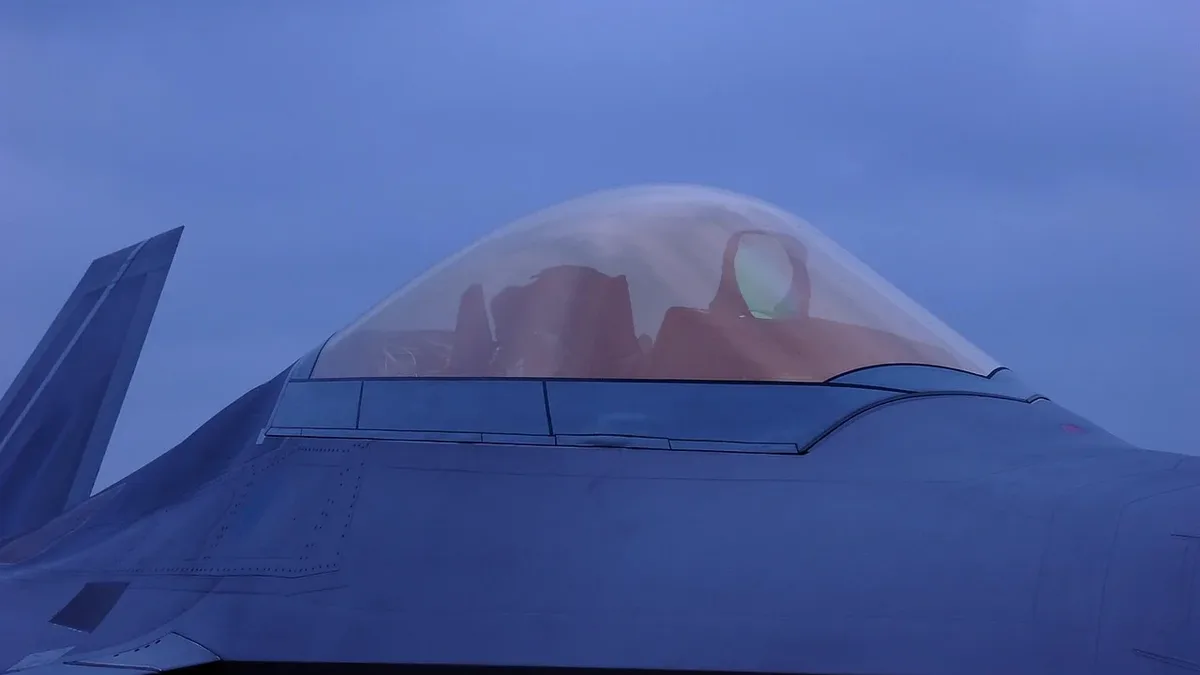
An F-22 Raptor pilot has directly commanded a pre-production YFQ-44A Fury drone in a mid-air test. This first-of-its-kind demonstration marks a critical advance for the U.S. Air Force's plan to field 500 Collaborative Combat Aircraft (CCA) by 2032.
The test occurred earlier this month at Edwards Air Force Base in California. The F-22 and the Anduril-made Fury took off and joined in the air. The Raptor pilot, acting as an airborne quarterback, sent an updated mission plan to the drone via tactical data link. The multi-hour mission was deemed a success. The drone's autonomy software interpreted the pilot's real-time directives to execute dynamic flight maneuvers and simulated combat tasks.
CCA Program Milestone and Strategic Context
The test is a key step in the Air Force's ambitious CCA program. The goal is a fleet of at least 500 Increment 1 combat-ready, semi-autonomous systems by 2032, with a total future fleet size of 1,000. Each air vehicle is targeted to cost at most $20 million. The first operational tranche is expected by the end of the decade.
Secretary of the Air Force Troy Meink stated the achievement shows progress toward rapid capability delivery. "This achievement demonstrates what is possible when we are aligned with industry on a shared imperative: delivering capability to the warfighter at unprecedented speed," Meink said.
The service has already ordered production of FQ-44As and General Atomics’ FQ-42A Vengeance drones under Increment 1. The Fury conducted its first live-fire test in July, executing a beyond-line-of-sight strike against a simulated target at Edwards. It has also integrated an AIM-120 air-to-air missile and supports bombs and cruise missiles.
Technical Execution and Operational Implications
The demonstration proved the software architecture for real-time crewed-uncrewed teaming. Personnel from multiple test, evaluation, and software engineering units collaborated on the event. Data will inform further software integration and testing concepts.
The ultimate aim is for a single fighter pilot to control multiple CCAs simultaneously. This test involved one Fury, but plans are to scale up. Air Force Chief of Staff Gen. Kenneth S. Wilsbach called the demo a success showing the power of such teaming. Lockheed Martin is developing control architectures and user interfaces for drone command from the F-22 cockpit, moving beyond current tablet-based systems.
Path to Operational Deployment
Development is accelerating across the CCA portfolio. General Atomics’ Vengeance drone was delivered to Creech Air Force Base, Nevada, last month. The company demonstrated a similar test with an F-22 and an MQ-20 Avenger surrogate in November 2025. Both Fury and Vengeance drones are scheduled to debut in the upcoming Exercise Emerald Flag.
The Experimental Operations Unit at Nellis Air Force Base leads preparation for future CCA operations. Its Director of Operations, Lt. Col. Lyndon 'OTTO' Bartlett, confirmed the first large-force employment exercise with multiple CCAs is scheduled for December.
Anduril’s Vice President of Autonomous Airpower, Mark Shushnar, stated the U.S. Air Force’s CCA program is the fastest-moving and most mature in the world and will be first to field operational aircraft. The first large-force employment exercise involving multiple CCAs is scheduled for December.