Thales and HII Win $53.9M US Navy Mine-Hunting Contract
The US Navy has awarded Thales North America a $53.9 million contract for remote mine-hunting modules, a deal that could grow to $196.2 million.
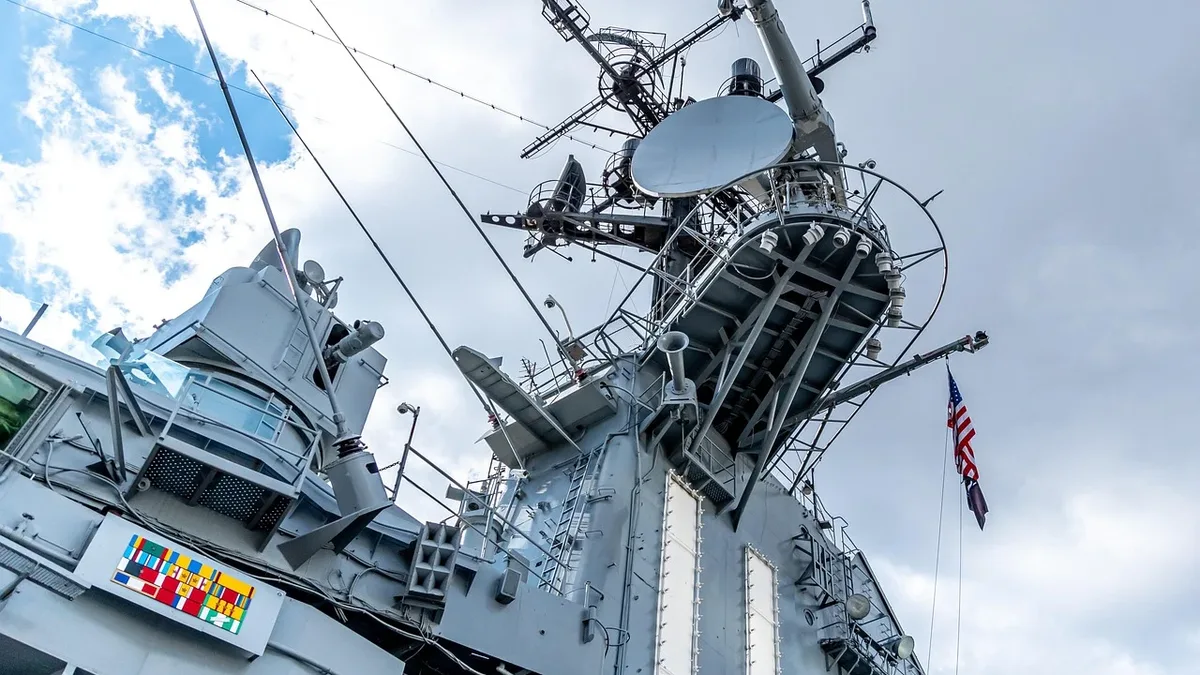
The US Navy has awarded Thales North America a $53.9 million contract for at least two remote mine hunting modules. The contract, which includes engineering support, holds a potential value of $196.2 million for additional units.
Advanced Acoustic Concepts, a U.S. defense subsidiary of the Thales Group, secured the award. The program aims to expand the Navy's autonomous mine-countermeasure capabilities. It directly supports the service's push to keep sailors away from hazardous minefields.
Technology and integration
The remote mine hunting modules are built around Thales's SAMDIS 600 sonar. This system provides high-resolution imaging and is augmented by artificial intelligence software. The sonar was recently tested on an unmanned underwater vehicle from HII during a mine-countermeasures exercise.
Thales and HII partnered to integrate the SAMDIS 600 sonar onto HII's REMUS 620 unmanned underwater vehicle. The REMUS 620 is designed for long-range, multi-day operations. Mission planning and management is handled through HII's Odyssey software, while operations are coordinated from Thales's Expeditionary Portable Operation Center.
HII's Sea Launcher system provides automated underwater launch and recovery for the vehicle. After a mine is detected and classified, the teams can employ Thales's ANGLER underwater effector to neutralize it. This end-to-end combination of sonar, software, and remote vehicles supports the Navy's 'Find, Fix and Finish' doctrine for mine warfare.
The AI-augmented software processes, classifies, maps, and manages sonar data. It shortens the search timeline and improves confidence in detection results. Tony Lengerich, vice president of naval programs at Thales Defense & Security, Inc., explained the sonar's advantage. "You get three looks at an object instead of just one look," he said, describing it as a three-beam system that improves detection certainty.
Human-factor benefits
A core driver for the program is sailor safety. The integrated system allows crews to detect, locate, and classify undersea mines from a remote distance. The Sea Launcher can be paired with either manned or unmanned surface vessels, further distancing personnel from the threat area.
Nicholas Green, senior manager of international business development at HII, emphasized that keeping sailors out of the minefield is critical. The multiview towed synthetic aperture sonar is designed to provide high-resolution imagery while reducing false targets. Rob Geckle, CEO of Thales North America, showed the strategic importance. "The ability to counter undersea mine threats remains fundamental to maritime security and naval mission success," he stated.
Future outlook
The first two remote mine hunting modules are scheduled for delivery by October 2029. The contract includes options for potential follow-on modules that could extend production through 2039 and beyond. The award combines technology from Thales's international portfolio with the deep, U.S.-based experience of its subsidiary in delivering integrated undersea warfare capabilities to the Navy.
Mike Carnovale, president of Advanced Acoustic Concepts, highlighted the fusion of proven technologies and operational experience. The program is designed to simplify mine hunting and accelerate the path from detection to neutralization for the fleet. The initial units are now in development, with delivery expected before the end of the decade.