USS George Washington Achieves 200,000th Aircraft Recovery
The USS George Washington, a Nimitz-class nuclear-powered aircraft carrier, has reached a milestone of 200,000 aircraft recoveries after 34 years of service.
The USS George Washington, a Nimitz-class nuclear-powered aircraft carrier, has achieved a significant milestone in its operational history, marking the 200,000th recovery of a fixed-wing aircraft. This milestone was reached on August 18, 2026, in the Indian Ocean, when Lieutenant Steven Frazier of the Strike Fighter Squadron 147 landed an F-35C Lightning II on board after a routine mission.
Evolution of Carrier-Based Aviation
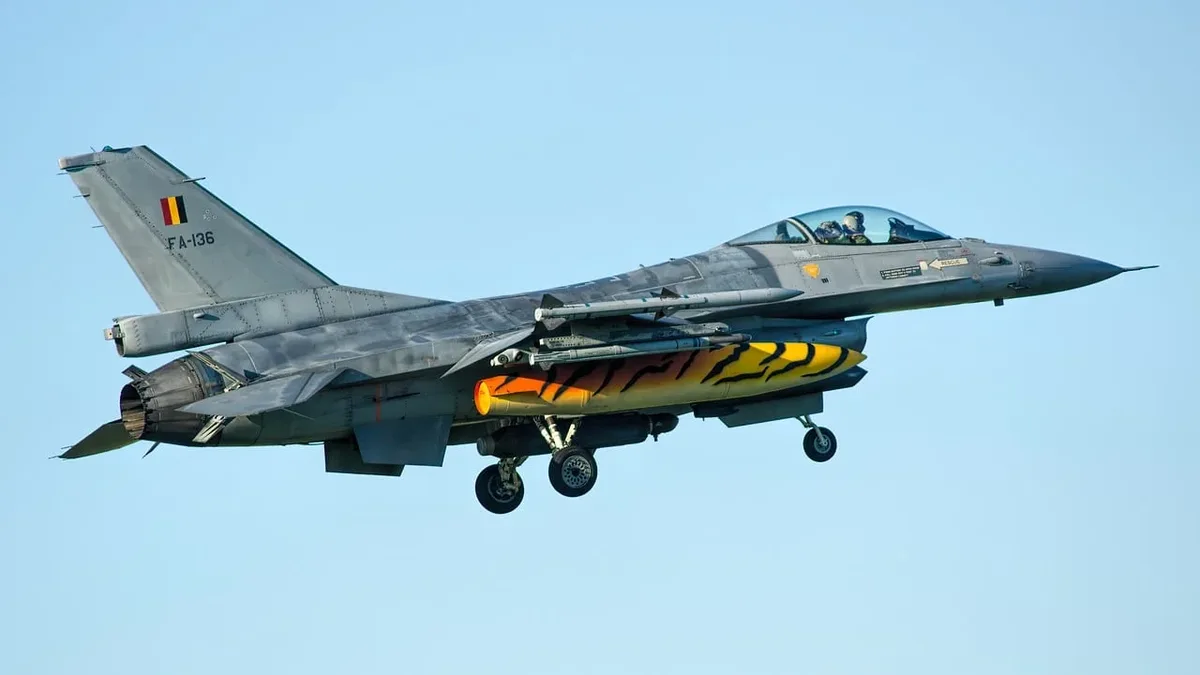
The achievement highlights the evolution of US carrier-based aviation over the past three decades. During its 34 years of service, the USS George Washington has hosted various aircraft, including the F-14 Tomcat, F/A-18C/D Hornet, F/A-18E/F Super Hornet, EA-18G Growler, E-2 Hawkeye, and currently, the F-35C Lightning II. The transition from variable-geometry wings to stealth-designed surfaces reflects a shift in the understanding of fighter aviation, from a focus on speed, range, and power to an emphasis on stealth, sensor integration, and real-time information.
Each recovery is a demonstration of precision, known as a trap in US naval terminology, where the aircraft's tailhook captures one of the steel cables on the flight deck to stop the plane in a very short distance. The USS George Washington can recover approximately one aircraft per minute and typically receives around 70 aircraft through various events during a single day. Behind each landing are pilots, landing signal officers, deck crew, arresting gear teams, and maintenance specialists, whose coordination enables the flight deck to function like a moving airfield.
Operational Capabilities
The 200,000 recoveries are more than just an accumulated record in the US Navy's systems. They represent thousands of days of air operations and the work of successive generations of sailors who have kept the ship operational. Captain Nicholas DeLeo, commanding officer of the USS George Washington, highlighted the role of the arresting gear teams, deck crew, maintainers, and each member of the watch teams that keep the ship fully operational.
The USS George Washington continues to operate in a different scenario than it did for most of its career. The carrier is currently part of the Seventh Fleet's area of responsibility and, until its recent relocation, was the primary US aircraft carrier deployed forward in Japan. Its Carrier Strike Group 5 includes the USS George Washington, Carrier Air Wing FIVE, the Ticonderoga-class guided-missile cruiser USS Robert Smalls, and the Arleigh Burke-class guided-missile destroyer USS Shoup.
Redeployment and Strategic Implications
In August, the USS George Washington left the western Pacific and, accompanied by its strike group, navigated west through the Singapore and Malacca straits into the Indian Ocean. This movement is necessary to relieve the USS Abraham Lincoln, which has been deployed in the Middle East as part of US operations against Iran. The redeployment temporarily removes the US aircraft carrier that was forward-deployed in Japan, precisely when China is increasing its naval and air activity in various points of tension in the Indo-Pacific. The USS George Washington's departure opens a pause in the US naval aviation presence in the western Pacific, while Washington continues to face simultaneous operational demands in two strategic scenarios.
With the 200,000 recoveries achieved, the USS George Washington adds another chapter to its trajectory, which can also be read through the aircraft that have passed through its flight deck. From the F-14 Tomcat to the F-35C Lightning II, the carrier has accompanied the replacement of complete generations of naval aviation without altering its essential function: projecting power from the sea, launching aircraft, and recovering them on a constantly moving flight deck. The new record synthesizes 34 years of operations and anticipates that the old Nimitz-class carrier still has thousands of new recoveries ahead before closing its operational history.