Colombian Army Targets Caribbean Drug Corridors
The Colombian Army's recent operation against the Autodefensas Conquistadoras de la Sierra Nevada highlights the strategic battle for Caribbean coastal

The Colombian Army launched an operation against the Autodefustas Conquistadoras de la Sierra Nevada (ACSN) on June 15 in rural areas of the Sierra Nevada de Santa Marta. In response, the criminal group blocked sections of the Troncal del Caribe highway, disrupting traffic between Magdalena and La Guajira departments before security forces regained control through a coordinated effort with national and local authorities.
According to the Foundation for Peace and Reconciliation (FIP), the ACSN's primary revenue comes from drug trafficking and extortion. The organization controls corridors linking inland routes to Caribbean departure points, operates storage sites, and charges other criminal networks for access to coastal areas used to export cocaine. The group consolidated under its current name in 2020 and maintains a presence primarily in Magdalena, César, and La Guajira, with signs of expansion into Santander and Norte de Santander.
Yadira Gálvez, a security expert and professor at the National Autonomous University of Mexico, told Diálogo that these organizations establish systems of criminal governance. They impose rules of behavior, exert direct control over communities, and secure the corridors that sustain their operations.
Geography as a Strategic Asset
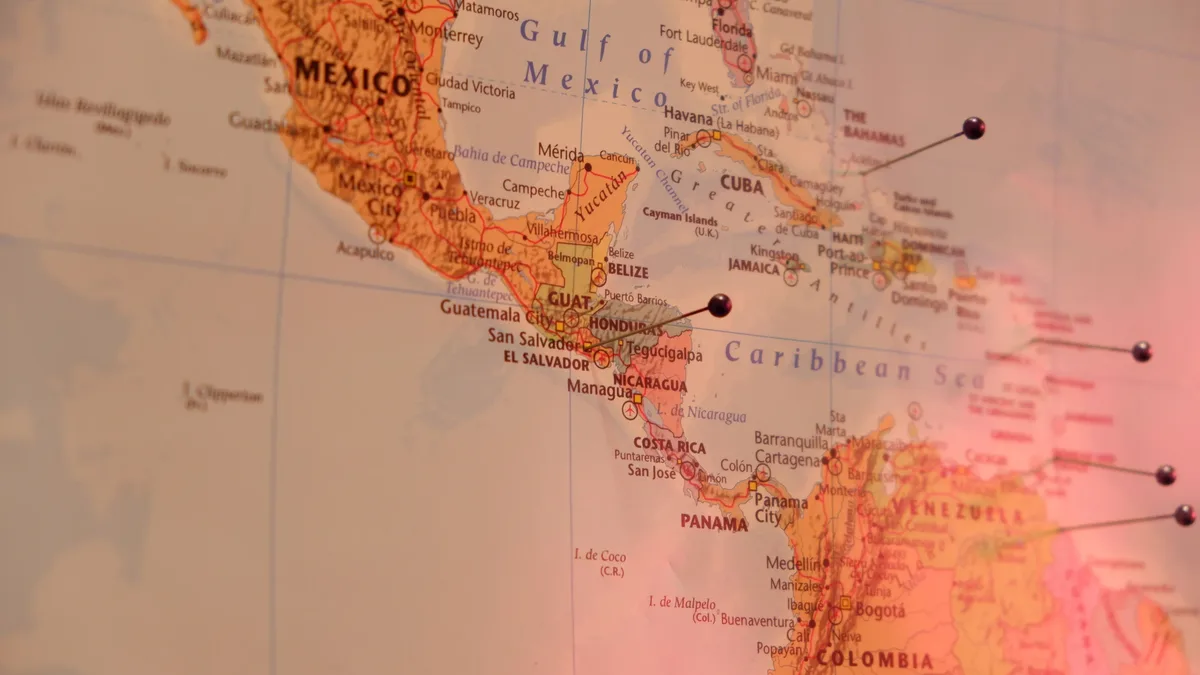
Colombia's Caribbean region includes major ports in Santa Marta, Barranquilla, and Cartagena, plus an extensive network of highways and coastal areas. Gálvez stated that controlling these corridors allows criminal groups to protect storage sites, secure embarkation points, sustain logistics networks, and extort legitimate economic activities like tourism.
A Ministry of Justice report identified the sustained presence of 98 criminal groups in 618 municipalities between 2018 and June 2024. The study found these organizations have diversified revenue through illegal mining and extortion while strengthening export corridors to Central America, Europe, and Africa.
Colombia remains the world's leading producer of cocaine. Between 2016 and 2024, the departments of La Guajira, Magdalena, and Bolívar accounted for nearly 20 percent of the country's cocaine seizures, according to the Ministry of Justice.
An Adaptable Criminal Model
Criminal organizations have changed how they control corridors. Larger groups increasingly rely on alliances with local criminal groups to secure routes, storage sites, and embarkation points. This model reduces operational costs and uses local knowledge but can create new conflicts as local groups grow stronger and more autonomous.
Gálvez said this adaptability reflects a constant search for new ways to operate. Criminal organizations incorporate new technologies, modify transportation methods, and shift operations to areas with less government pressure-a phenomenon known as the 'balloon effect.'
A Sustained Military and Institutional Response
The Ministry of Justice states Colombia has progressively strengthened its institutional and legal framework to combat organized crime. This complements military operations with measures aimed at disrupting financial and logistical structures.
Recent efforts have also focused on specialized components of transnational crime, particularly networks involved in money laundering and the logistical coordination of drug trafficking supply chains, according to InSight Crime.
Gálvez emphasized the importance of integrating intelligence, planning, and interoperability among the Colombian Army, National Police, and Office of the Attorney General. The operational challenge is to maintain pressure on strategic corridors while protecting civilian populations, especially in Indigenous community areas, and to strengthen financial investigations.
International cooperation complements these efforts through information sharing and bilateral mechanisms. The operation against the ACSN demonstrates that protecting a strategic corridor requires a sustained effort combining intelligence, territorial control, interagency coordination, and international partnerships to prevent criminal networks from rebuilding.