Germany, US sign pact for shared missile
Germany and the United States have signed a defense agreement to establish Germany as an additional production hub for Patriot interceptors and to explore
German Defense Minister Boris Pistorius and U.S. Defense Secretary Pete Hegseth signed a defense cooperation agreement at the Pentagon on Tuesday. The pact positions Germany as an additional production hub for scarce American munitions, including Patriot air-defense interceptors and potentially components for Tomahawk cruise missiles.
U.S. Defense Secretary Pete Hegseth framed the agreement as a merger of defense-acquisition reforms in both nations. "When we align the two, you expand opportunities for joint development, production, licensed manufacturing and expanded maintenance and sustainment capacities, exactly what allied countries should be doing," he said.
Current and Planned Production
MBDA Germany already manufactures older PAC-2 Patriot interceptors. Production of the newer PAC-3 MSE interceptor is scheduled to begin at the company's Schrobenhausen plant later this year. Officials will also explore which Tomahawk cruise missile components Germany could supply.
Berlin seeks to purchase Tomahawks and Typhon launchers for its new "deep precision strike" complex. While political agreement exists for the sale, the manufacturing timeline is longer than German defense leaders desire. Tomahawks are prized for their precision at a range of 1,000 miles.
Addressing Munitions Shortages
Patriot interceptors and Tomahawk cruise missiles exemplify scarce weaponry. European nations have sent much of their Patriot inventory to Ukraine, depleting their own arsenals. U.S. Forces have reportedly drawn down Tomahawk stocks considerably during the war against Iran, making them hard for European allies to obtain.
Germany is pursuing multiple avenues for long-range strike capabilities. It is developing an upgraded version of its German-Swedish Taurus missile and participating in the European ELSA program for a homegrown alternative. Officials are also eyeing the Anthem cruise missile from U.S. Firm Covenant and potential cooperation with Ukraine.
European Tensions Over Autonomy
The new industrial pact may strain relations with European autonomy advocates, particularly France. Paris has seen Berlin abandon joint weapons programs in recent years for faster U.S. Purchases, like Boeing P-8 aircraft and Lockheed Martin F-35 jets. French officials viewed these moves as undermining bilateral efforts to develop next-generation European aircraft.
France has criticized using European funds to license-produce U.S. Weapons. Former Armed Forces Minister Sebastien Lecornu called it a "historic mistake" in February 2025. The French government argues EU money should build European industrial capacity, citing German Patriot production instead of investment in the French-Italian SAMP/T system.
Geopolitical Justification
During the announcement, Minister Pistorius provided a stark geopolitical rationale for the agreement. "We need to realize once more … that we are currently experiencing what might be the greatest threat to the alliance, the West, and our way of life since the height of the Cold War," he stated. He cited Russia's war in Ukraine, nuclear modernization, Arctic expansion, and space militarization, concluding Russia will remain the biggest threat to Euro-Atlantic security for the foreseeable future.
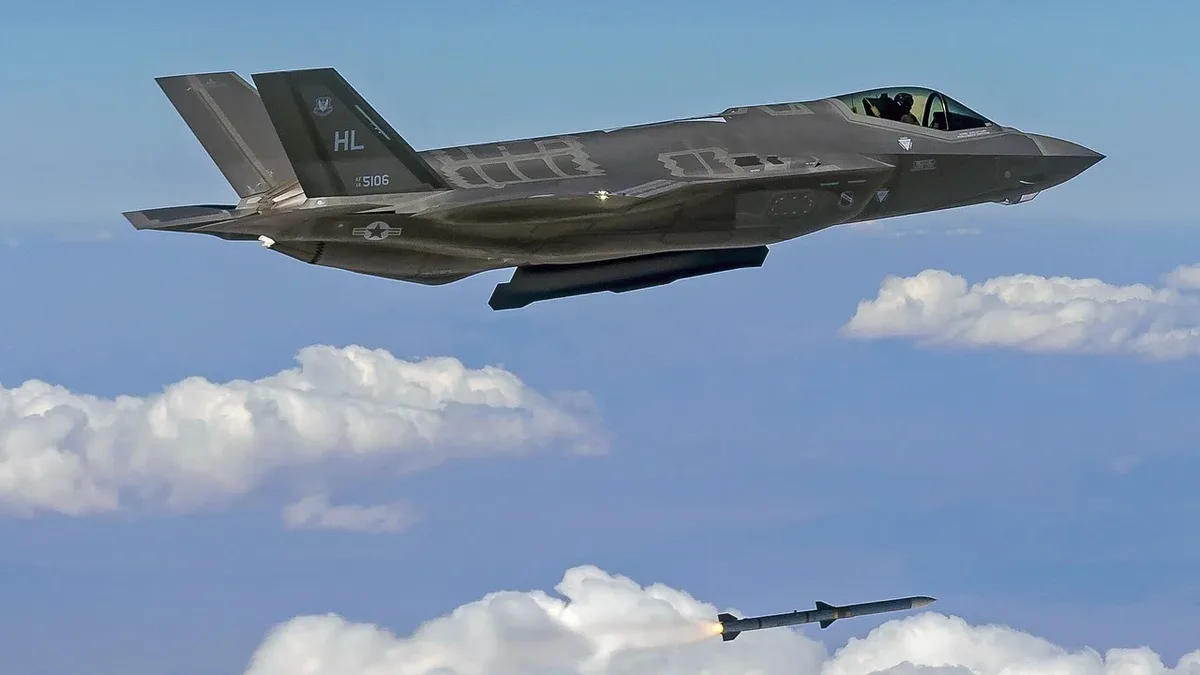
Pistorius's visit will conclude with a handover ceremony for Germany's first F-35 fighter jet from Lockheed Martin's plant in Texas. Germany has ordered 35 of the planes, with defense officials in Berlin considering more.