Argentina Ejercito
| Country of origin | Argentina |
|---|---|
| First created | 1810 |
| Original use | National defense and internal security |
| Role in the state | Primary land warfare component of the Argentine Armed Forces |
| Current status | Active |
| Size | Approximately 50,000 personnel |
| Main equipment categories | Infantry weapons, armored vehicles, artillery, aircraft |
Origin and history
The Argentine Army, known as the Ejército Argentino, traces its institutional origins to the militias and armed forces of the Spanish Viceroyalty of the Río de la Plata in the late 18th and early 19th centuries. Its formal foundation as a national army is widely associated with the May Revolution of 1810 and the subsequent Argentine War of Independence. Key figures in its early development were General José de San Martín, who led the Army of the Andes in a crucial campaign across the continent to secure independence from Spain. Throughout the 19th century, the army was central to internal conflicts between Unitarians and Federalists and to the consolidation of national borders. The 20th century saw its involvement in multiple military coups, establishing several de facto governments and profoundly influencing national politics from the 1930s until 1983. The most recent period of dictatorship, from 1976 to 1983, involved the army in the Dirty War, a state terrorism campaign with lasting societal consequences, after which it returned to a subordinate role under democratic civilian control.
What it is for
The primary constitutional role of the Argentine Army is the external defense of the nation and the protection of its territorial integrity. Its core functions include deterring external aggression and, if necessary, engaging in conventional warfare to defend national sovereignty. A secondary and legally defined function is to provide support to internal security, only at the formal request of civilian authorities, typically in aiding against natural disasters or severe civil emergencies. The army also maintains a permanent presence in border regions and contested zones, such as the southern Patagonian territories, to assert sovereign control. It contributes personnel and logistical support to United Nations peacekeeping operations around the world, a long-standing commitment. Furthermore, the army engages in civic action programs, such as engineering projects and medical assistance in remote areas, as part of its relationship with civil society.
Pros and cons
A primary strength of the Argentine Army is its extensive institutional experience in complex logistical operations across diverse and challenging geography, from northern jungles to southern glaciers. Its historical involvement in international peacekeeping has provided valuable operational experience and fostered professionalism within certain units. However, a significant and persistent con is the severe budgetary constraints imposed by the nation's recurring economic crises, which chronically limit training, maintenance, and modernization. This underfunding often leads to a pronounced disparity between theoretical operational capability and actual readiness, with much equipment being obsolete or poorly maintained. The institution continues to grapple with the profound legacy of the last dictatorship, which damaged its public legitimacy and complicates its relationship with civil society and democratic governance. A common mistake for political leaders is to view the army as a readily deployable, high-capacity force for internal security without acknowledging the corrosive effects of long-term underinvestment on its effectiveness and discipline.
Who it suits
A career in the Argentine Army suits individuals with a strong sense of national service and patriotism, who are motivated by the ideal of defending the nation rather than by financial reward. It is suited for those interested in engineering, logistics, or mechanics, as these technical branches often see more consistent development and application than combat arms. The institution can be a viable path for individuals from regions with limited economic opportunities, offering stable employment, education, and a structured career ladder. It suits personnel who are adaptable and resourceful, able to operate effectively with aging equipment and under stringent budgetary limitations. The army also suits those seeking international deployment experience, given its sustained participation in UN peacekeeping missions.
Latest Argentina Ejercito news
Latest reporting
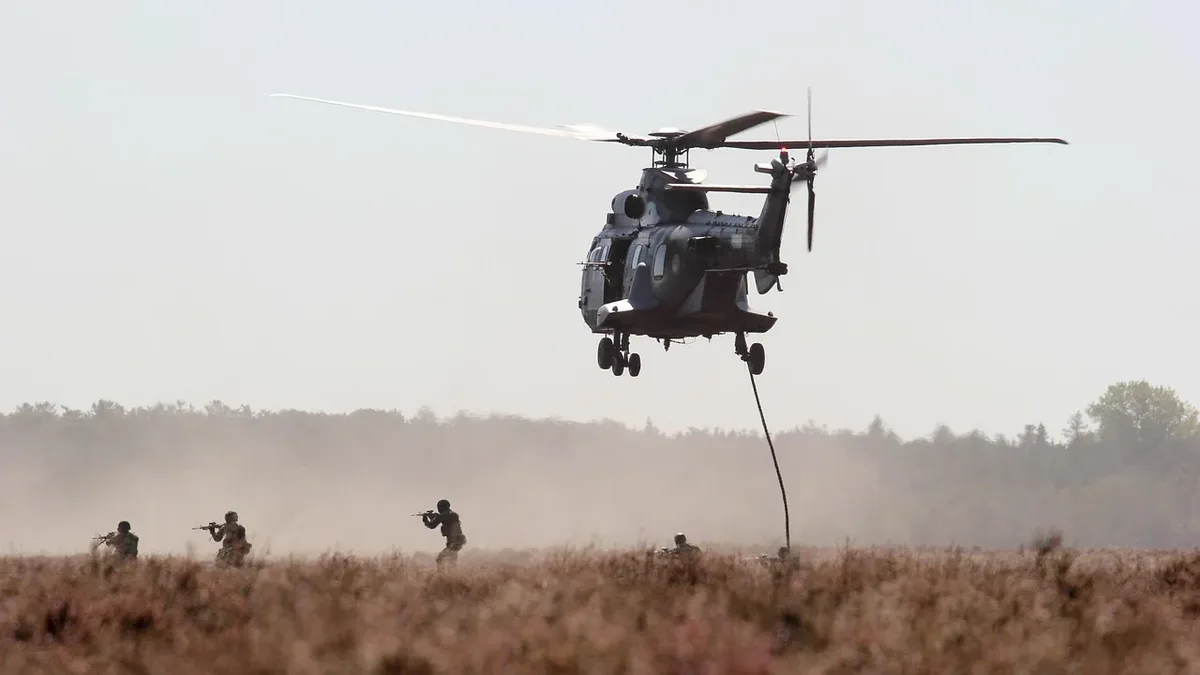
Argentina's Joint Chief on Hemispheric Security
Adm. Marcelo Dalle Nogare, chief of Argentina's Armed Forces Joint Staff, outlines the country's leading role in new U.S.-led counter-cartel efforts...

Argentina and Brazil Launch Maritime Phase of Exercise Fraterno XXXIX
The Argentine Navy and the Brazilian Navy have launched the maritime phase of Exercise Fraterno XXXIX, a joint training exercise between the two...
Argentina's Defence Ministry Launches Tender for Heavy-Lift and Reconnaissance Drones
The Argentine defence ministry has opened a procurement process for four unmanned aerial vehicles - two reconnaissance drones and two heavy-cargo...