Indian Navy's AIP system reaches crucial development milestone
The Indian Navy's indigenous air-independent propulsion system has achieved a key testing milestone, enhancing submarine endurance.
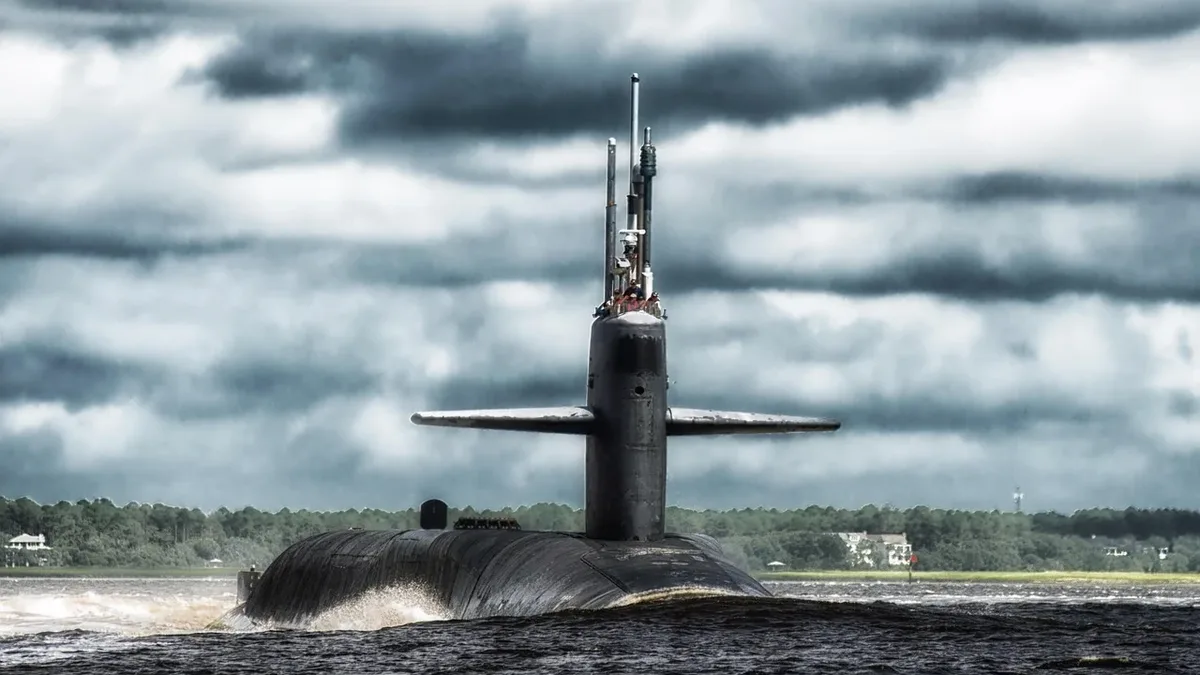
The Indian Navy's underwater capabilities are being enhanced with the development of an indigenous air-independent propulsion system. The AIP system energy module has achieved a crucial 'Setting to Work Phase-2' milestone, boosting the underwater endurance of diesel-electric submarines by reducing their dependence on atmospheric oxygen.
System Development
The AIP energy module will be energised for power production and tested rigorously as per the Navy's protocols. It will then be handed over to Mazagon Dock Shipbuilders Limited for integration on the Kalvari-class submarine in early 2027.
The 'Setting to Work Phase-2' inauguration took place at Larsen and Toubro's AM Naik Heavy Engineering Complex in Hazira, Gujarat. Defence Secretary Rajesh Kumar Singh, who also chairs the DRDO, participated virtually. Chief of Materiel, Indian Navy, Vice Admiral B Sivakumar and DRDO's Director General (Naval Systems & Materials), R Balamuralikrishnan, attended in person.
Singh congratulated DRDO and industry partners for their scientific perseverance. He acknowledged the Indian Navy's cooperation throughout the programme, including testing and validation at every stage. Singh emphasised working towards the next phases to meet the Navy's induction timelines while maintaining an exacting safety culture for the hydrogen and fuel cell systems. The indigenous AIP system was developed by the Naval Materials Research Laboratory, DRDO.
Global Context
Globally, other companies are advancing underwater technologies. Fincantieri signed agreements in July 2026 to acquire majority stakes in Next Geosolutions, WSense, Graal Tech and Defcomm. The acquisitions create a vertically integrated operator across the entire underwater value chain.
The portfolio spans marine survey, underwater sensing and communications, robotics and uncrewed surface vehicles. Graal Tech's X300 AUVs, IDS' Catcher surface platforms and Defcomm's Raptor USVs are already integrated into the DEEP system. DEEP is a modular, scalable and cyber-secure 'system of systems' designed to protect critical infrastructure.
DEEP is built around a fixed underwater sensing core combining passive acoustic early-warning with diver-detection sonar, coordinated through an Underwater Management System. DEEP 4D extends the concept to include surface and aerial awareness with electro-optical and infrared systems. The UMS provides the coordinating layer correlating threats, managing alarms and supporting mission tasking.
Connectivity differs above and below water. Radio networks link surface assets and shore nodes, while underwater vehicles rely on constrained acoustic communications. Automation should reduce workload without obscuring responsibility, with operators retaining authority over responses.
Underwater protection cannot succeed in isolation if the supporting base, vessel or control station remains vulnerable to aerial and surface attack. The naval platform remains a vector: a mobile carrier that transports, connects and sustains mission capabilities. Mission kits determine operational emphasis, allowing the same platform to undertake different tasks without becoming a new ship. Such platforms complement rather than replace frigates, submarines and specialist vessels.
Small, low-cost uncrewed systems can impose disproportionate demands on sensors and operators. Quiet underwater contacts require different detection methods from fast craft concealed in harbour traffic or low-flying drones. No single sensor or platform can resolve every threat; the response must combine complementary sensing, mobile inspection and proportionate action.
Turnkey delivery should mean an integrated, supportable capability: site assessment, interface engineering, training, acceptance trials and through-life assistance. Demonstrations can establish elements of integration, but coverage, communications and operational suitability still require validation. The industrial opportunity is to connect shipbuilding strength with underwater sensing, robotics, digital integration and lifecycle services. Navies can gain a force that can evolve through payload and software upgrades while retaining a durable platform foundation. Fincantieri said: "Connecting adaptable naval platforms, underwater systems and layered protection offers a more flexible response to threats that no longer respect the waterline."
The AIP system will be integrated on the Kalvari-class submarine after rigorous testing.