Lockheed Martin Wins $694 Million ARRW Hypersonic Missile Contract
The U.S. Air Force has awarded Lockheed Martin a $694 million contract to produce the AGM-183A ARRW hypersonic missile, restarting a program canceled in 2023 and moving it from testing to production.
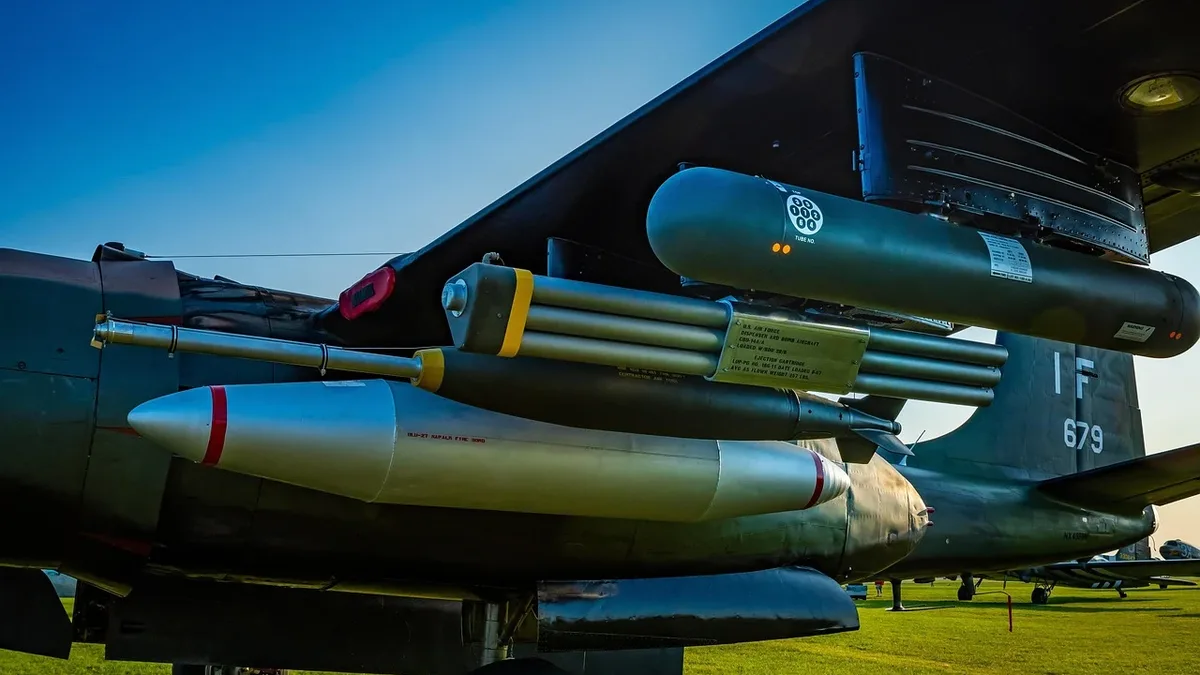
The U.S. Air Force awarded Lockheed Martin a $694 million contract in late September for the production and fielding of the AGM-183A Air-Launched Rapid Response Weapon (ARRW). Signed on September 29, 2026, and made public on October 26, the contract reverses the 2023 decision to cancel the hypersonic missile program after repeated test failures. It transitions ARRW from prototyping to production under the Department of the Air Force's Enterprise-Wide Agile Acquisition Contract framework. The number of missiles ordered and their delivery schedule were not disclosed, with the Air Force citing operational security.
This move marks a significant shift in the service's long-range strike modernization plans. The boost-glide weapon is designed to accelerate to speeds greater than Mach 5 using a solid-fuel rocket booster before releasing a hypersonic glide vehicle, ultimately capable of reaching speeds up to Mach 15. It is intended to enable time-sensitive strikes on heavily defended targets from standoff range. Secretary of the Air Force Troy Meink stated the move gives combatant commanders a high-speed strike option to penetrate advanced anti-access and area-denial systems.
Program history and technical specifications
The ARRW program's path to production was turbulent. Development work by Lockheed Martin began in 2018, with captive-carry trials on a B-52H Stratofortress occurring the following year. The program then suffered three unsuccessful launch attempts in 2021. A turnaround began with the first successful booster test flight in May 2022, followed by the first successful all-up-round test in December of that year. A subsequent test in March 2023 encountered difficulties.
Despite these setbacks, testing continued. A B-52H launched the missile in March 2024, successfully demonstrating its ability to strike a land target. Another test from Guam against the Reagan Test Site that year replicated a 4,000-kilometre operational mission. These successes supported the shift to production. Then-Air Force Chief of Staff General David Allvin confirmed in June 2025 the service's intention to buy the weapon, with funding planned for the fiscal 2026 budget.
Facility expansion and industrial impact
To support the increased production capacity, Lockheed Martin is significantly expanding its industrial base. The company is adding approximately 4,370 square meters of production space to Building P-20 at its Troy, Alabama facility. This expansion triples the existing area and is expected to create jobs over the next four years. Lockheed Martin had already committed $67 million of its own funding for facility expansion and equipment before receiving government contracts.
This investment is part of a broader push. The company plans an $8 billion to $9 billion investment through 2030 to meet growing demand for munitions. It had previously opened a hypersonic missile assembly facility in Courtland, Alabama, in October 2021 to support ARRW and other programs.
Budget and funding context
The new production contract follows specific congressional budget actions. The fiscal 2026 budget allocated $362 million to restart ARRW production and begin procurement. For fiscal 2027, the Air Force has requested a total of $452 million for the program. This request is split between procurement funding and $296 million for the ARRW Increment 2 research and upgrade effort.
This funding revival contrasts sharply with recent budget plans. The fiscal 2025 budget request contained no procurement funding for ARRW, following the 2023 cancellation. At that time, the Air Force had shifted its public focus to the Hypersonic Attack Cruise Missile (HACM) program, which remains in flight testing. HACM uses a scramjet engine and is aimed at integration on tactical aircraft rather than bombers.
Operational integration and future upgrades
The B-52H Stratofortress is the initial operational platform for the ARRW, having conducted the first full operational prototype launch in December 2022. Integration work with the B-1B Lancer bomber has also been pursued. The award reflects the ongoing challenges in achieving broader defense industrial goals, such as boosting weapons production and reducing reliance on a few major contractors.
Looking ahead, annual expenditure on ARRW is projected to be between $556 million and $621 million from 2028 through 2031. A planned Increment 2 upgrade will add a terminal seeker and a data link, along with hardware changes and cost-reduction work. This enhancement is designed to enable the missile to engage moving targets, including warships at sea.