US and Japan deepen missile production partnership with new AMRAAM facility
The US and Japan have agreed to establish the first final assembly facility for AIM-120 AMRAAM missiles outside the United States, a move that includes boosting production of the SM-3 Block IIA interceptor as part of a broader defence industrial collaboration.
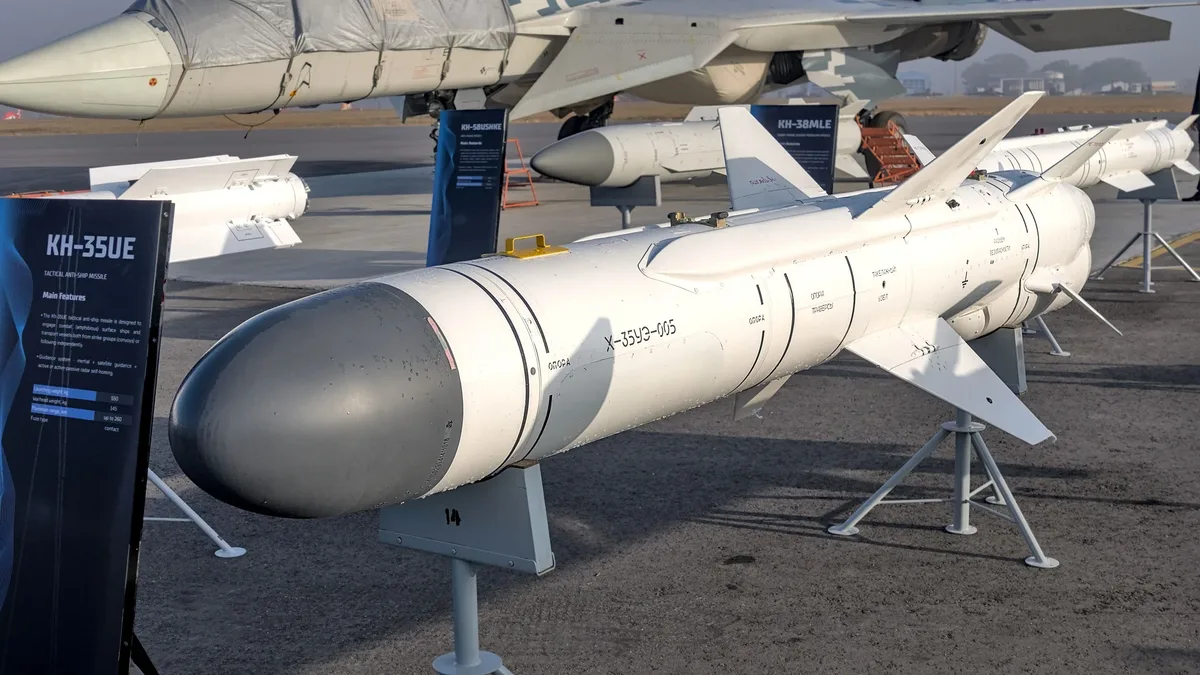
The United States and Japan have finalized a plan to assemble AIM-120 Advanced Medium-Range Air-to-Air Missiles in Japan. This marks the first final assembly and inspection facility for the weapon outside the United States, a significant step in allied military production.
Japanese Defense Minister Shinjiro Koizumi and US Secretary of Defense Pete Hegseth reached the agreement at the Association of Southeast Asian Nations (ASEAN) Defense Ministers’ Meeting in the Philippines. The facility will operate under the Operation Supercharge initiative. Koizumi called it a "groundbreaking agreement."
Production and industrial cooperation
The deal extends beyond the AMRAAM. It includes sharing technical information to increase production of the Standard Missile-3 Block IIA interceptor, a joint US-Japan program. Japan's principal industrial partner, Mitsubishi Electric, will be involved. The company had been in talks with American manufacturer Raytheon for over two years to explore local assembly. Japan will also contribute circuit card assemblies to the AMRAAM production line.
Strategic context and threats
These agreements are part of a concerted effort to deepen defence ties. Japan is moving to strengthen its capabilities and industrial base amid regional tensions. Koizumi stated that the two nations "shared a sense of crisis," alluding to the rising threat of Chinese expansion. The collaboration operates within Japan's existing, though evolving, restrictions on arms exports and defence-industrial cooperation.
Financial and industrial scale
The new Japanese facility is part of a massive industrial expansion. In September, Raytheon was awarded a five-year AMRAAM production contract valued at up to $20.7 billion, with options for two additional years. This contract aims to nearly double AMRAAM production, with Raytheon working toward an annual output of at least 1,900 missiles. Each AIM-120 can cost over $1 million. Separately, the US has approved a $3.64 billion deal to sell 1,200 of the latest AMRAAM variants to Japan.
For the SM-3 Block IIA, recent contracts show the production ramp-up.
| Contract Date | Value | Purpose |
|---|---|---|
| July 2024 | Approx. $1.9-$2 billion | SM-3 Block IIA production |
| Summer 2026 | $745.39 million | Additional SM-3 Block IIA production |
A bilateral commitment made in March 2026 envisaged a fourfold increase in SM-3 Block IIA production in Japan. Full-rate production for the interceptor was reached in October 2024.
Regional and global impact
The AMRAAM is a cornerstone of modern air power, used by 44 countries across 14 different platforms. It is essential for F-35 Joint Strike Fighters operated by both the US Air Force and Japan Air Self-Defense Force. The missile is also a key component of ground-based air defence systems like NASAMS, which Ukraine has used to counter Russian drones and cruise missiles. The new Japanese assembly line will support regional F-35 fleets and bolster integrated air and missile defence networks. While the exact location, construction timeline, and the facility's share of the overall production target remain undisclosed, its establishment is a concrete step toward enhanced US-Japan defence industrial cooperation.