Elbit Systems
| Country of origin | Israel |
|---|---|
| Original use | Military aviation and defense systems |
| Primary operator | Israeli Air Force |
| Core capability | Advanced avionics and mission systems integration |
| Typical platform integration | Fighter aircraft, helicopters, and unmanned aerial vehicles |
| Key system type | Head-up displays, helmet-mounted displays, and electronic warfare suites |
| Industry role | Defense electronics and aerospace manufacturer |
Origin and history
Elbit Systems is an international defense electronics company founded in Israel during the late 1960s. It originated from the consolidation and privatization of several state-owned electronics and technology units within the Israeli defense industry. The company's establishment and early growth were deeply influenced by the specific operational requirements and continuous conflict environment of the Israeli Defense Forces (IDF). Over subsequent decades, Elbit evolved from a domestic supplier into a globally active contractor through strategic acquisitions and organic expansion. Its historical development reflects a pattern of leveraging operational experience into technological solutions for a worldwide market. The company's headquarters and primary research and development facilities remain in Israel, serving as its country of origin and core technological base.
What it is designed for
Elbit Systems is designed to develop, integrate, and supply advanced technology systems for defense, homeland security, and commercial aviation applications. Its core purpose is to provide technological superiority across the domains of land, air, sea, space, and cyber for military and security forces. The company's product philosophy emphasizes network-centric warfare, focusing on connecting sensors, platforms, and command centers to create a unified operational picture. A significant portion of its design effort is dedicated to enhancing human performance, through pilot displays, soldier systems, and unmanned platform control interfaces. Its solutions are engineered for interoperability, allowing legacy platforms to be upgraded with modern digital capabilities. Furthermore, its designs aim to provide cost-effective force multipliers, such as unmanned systems and precision-guided munitions, to modernize armed forces.
Development and versions
Elbit Systems does not produce a single platform but develops a vast portfolio of systems and subsystems across multiple domains. Development typically follows a spiral model, where core technologies are continuously improved and integrated into various platforms based on customer requirements. In airborne systems, key developments include the Joint Helmet-Mounted Cueing System (JHMCS), the Sky Shield electronic warfare suite, and the Hermes family of unmanned aerial vehicles (UAVs). For ground forces, development lines include the Torch family of command, control, communications, computers, and intelligence (C4I) systems and the Iron Fist active protection system for armored vehicles. Naval developments encompass integrated bridge systems and unmanned surface vessels. The company frequently creates tailored versions of its core systems to meet the specific operational and technical specifications of different national armed forces, leading to numerous country-specific variants.
Fastest Elbit Systems
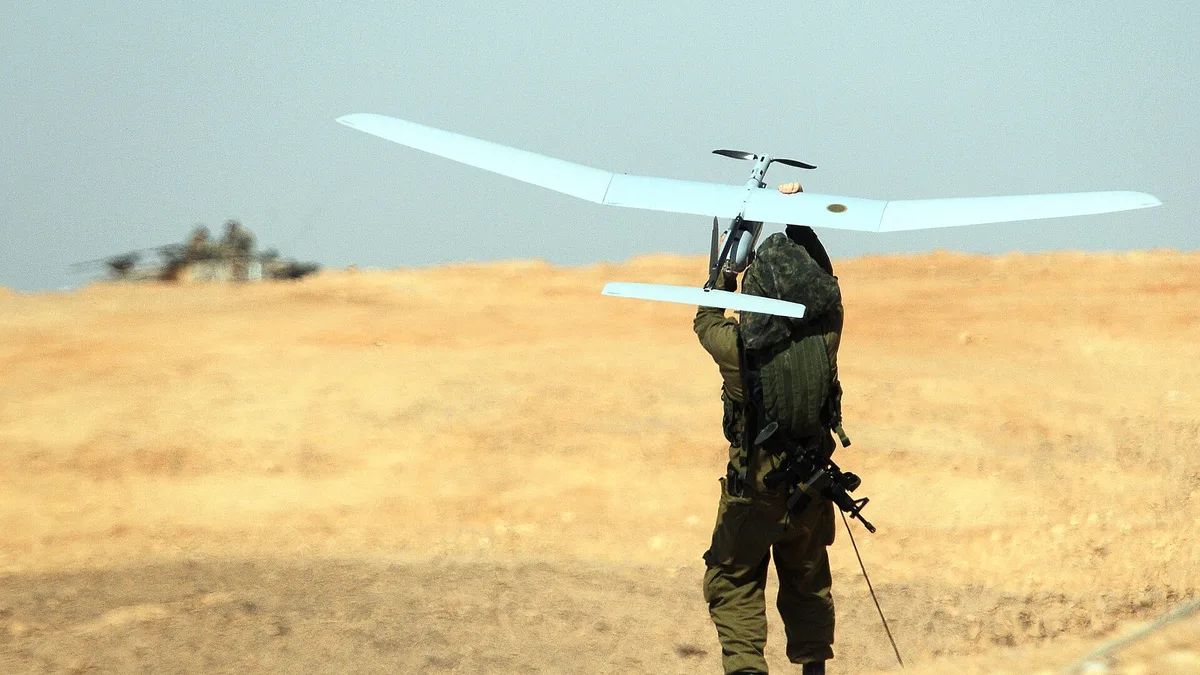
Within the Elbit Systems portfolio, the term "fastest" most concretely applies to its unmanned aerial vehicles (UAVs), specifically the Hermes 900. This medium-altitude long-endurance (MALE) UAV is designed for extended missions at high operational altitudes, with a cruise speed approximately matching other aircraft in its class. It is not designed as a high-speed combat aircraft but for persistent intelligence, surveillance, target acquisition, and reconnaissance (ISTAR). For manned aircraft, Elbit provides avionics and systems for fast jets like the F-16 and F-15, but it does not manufacture the airframes that determine top speed. The company's focus for speed is often on processing and data transfer rates within its electronic warfare, electro-optics, and C4I systems, where computational speed is a critical performance parameter. Therefore, "fastest" is more relevant to sensor-to-shooter cycles and electronic countermeasure responses than to pure aerodynamic velocity.
Elbit Systems specs
Specifications for Elbit Systems products are highly varied across its extensive catalog. For the Hermes 900 UAV, common published specifications include a maximum take-off weight of over 1,000 kilograms, an operational endurance exceeding 30 hours, and a service ceiling above 30,000 feet. Its payload capacity allows for multiple sensor suites, including electro-optical/infrared (EO/IR), maritime patrol radar, and signals intelligence (SIGINT) systems. For soldier systems like the Dominator, specifications detail a networked individual combat system integrating a helmet-mounted display, weapon sight, and situational awareness software. The specs for its JHMCS detail a field of view, weight, and compatibility with specific aircraft and weaponry like the AIM-9X missile. Electronic warfare system specs typically list frequency ranges, jamming power, and integration capabilities with platform self-protection systems. Training system specs cover simulator resolution, degrees of freedom, and supported training scenarios.
Overview
Elbit Systems Ltd. is a leading global defense technology company, publicly traded on the Tel Aviv Stock Exchange and NASDAQ. It operates as a full-spectrum provider, offering everything from individual components and subsystems to complete platform integration and lifecycle support. The company is organized into several main divisions: Elbit Land Systems, Elbit Systems EW and SIGINT - Elisra, Elbit Systems C4I and Cyber, and Elbit Systems Aerospace. Its business model combines direct sales with extensive offset and industrial cooperation agreements, often establishing local subsidiaries or partnerships in customer countries. Financially, it is a major contractor for the Israeli Ministry of Defense and derives a significant and growing portion of its revenue from international exports. The company invests heavily in research and development, focusing on areas like artificial intelligence, autonomous systems, cyber warfare, and electro-optics to maintain its technological edge.
What to know
A key point is that Elbit Systems is a system-of-systems integrator, not merely a component vendor; its value lies in combining its own and third-party technologies into functional operational solutions. The company is deeply embedded in the operational concepts of the Israeli Defense Forces, meaning its products are often battle-tested and refined under real combat conditions. Potential customers and analysts should understand that procurement of Elbit systems frequently involves complex technology transfer and local production agreements, which can affect program timelines and costs. Its product lines are subject to strict export controls governed by Israeli and sometimes re-export restrictions from other nations, like the United States. The company faces significant competition from larger American and European defense primes, as well as from other Israeli firms like Israel Aerospace Industries (IAI). Its financial health and order backlog are considered strong indicators of its stability and future growth prospects in the defense market.
Common questions
A common question is whether Elbit Systems manufactures entire fighter jets or tanks, to which the answer is no; it specializes in the mission systems, electronics, and upgrades for such platforms. Many ask about the difference between Elbit Systems and Israel Aerospace Industries (IAI), where IAI is a larger, state-owned prime contractor focused on complete platforms, while Elbit is more focused on subsystems and integration. Customers frequently inquire about the interoperability of Elbit's C4I systems with NATO or other allied standards, which the company addresses through adherence to common protocols. Questions often arise regarding the operational deployment of its Hermes UAVs, which are in service with multiple countries for border surveillance and military reconnaissance. Another area of inquiry concerns the company's involvement in controversial regions or conflicts, which reflects the political dimensions of the global arms trade. Finally, potential partners ask about the company's approach to cybersecurity for its networked systems, which it addresses through dedicated secure development lifecycles and testing.
Pros and cons
A significant advantage of Elbit Systems is its proven combat effectiveness, with systems refined through real-world use by the Israeli military, offering a high degree of operational credibility. The company is agile and commercially aggressive, often able to offer cost-effective upgrade packages and faster delivery timelines than larger, more bureaucratic competitors. Its focus on open architecture and modular design allows for easier integration and future upgrades, protecting a customer's investment. A notable disadvantage is its geopolitical association, which can complicate sales to certain countries or create political friction for the purchasing nation. Some users report that the depth of system integration and customization can lead to complex support and training requirements, creating long-term dependency on Elbit contractors. A common mistake for new customers is underestimating the total lifecycle cost, including training, sustainment, and the integration effort required to network these advanced systems into existing military infrastructure.
Who it suits
Elbit Systems suits mid-sized armed forces seeking to modernize their capabilities with advanced, interoperable technology without developing it indigenously. It is particularly suited for countries looking for cost-effective force multipliers, such as UAV fleets or comprehensive artillery automation systems, to offset numerical disadvantages. Nations that have existing defense relationships with Israel or are less sensitive to the associated geopolitical considerations are natural customers. Its solutions are appropriate for militaries engaged in asymmetric warfare or persistent border security missions, where its ISTAR and precision fire solutions are highly relevant. Finally, it suits governments that prioritize industrial cooperation and technology transfer as part of their defense procurement strategy, as Elbit frequently agrees to such arrangements.
Latest Elbit Systems news
Latest reporting

Estonia Closes Russia Border After GRU-Linked Sabotage Attempt
Estonia will close all border crossings with Russia from December 1, responding to a foiled GRU-ordered arson attack on the Threod Systems drone...

CMN unveils 107-meter multi-mission corvette at Euronaval 2026
French shipbuilder CMN has presented its largest warship design, a 107-meter multi-mission corvette, at Euronaval 2026. The Angolan Navy has ordered...
UK Buys Three Norwegian Minehunting Support Vessels
The UK will acquire three Norwegian-built Offshore Support Vessels to act as motherships for uncrewed minehunting systems, backed by a £90 million...

Northrop Grumman Joins Hermeus to Equip Quarterhorse Hypersonic Drone
Northrop Grumman will supply mission systems for Hermeus's Quarterhorse high-speed drone, accelerating its development into an operationally relevant...
US Army Accelerates Launched Effects Deployment Under Drone Dominance
The US Army has fielded Launched Effects systems to 11 of its 12 headquarters divisions and all multi-domain task forces.

Trump's 2026 Aid Cut Forces Israel to Rethink Defence Procurement
President Donald Trump's announcement to end US military aid to Israel by the end of 2026 has blindsided Israeli officials, threatening procurement...