Korea Aerospace Industries
| Country of origin | South Korea |
|---|---|
| First created | 21st century |
| Original use | Military aviation |
| Primary operator | Republic of Korea Air Force |
| Role | Advanced multirole fighter |
| Manufacturer | Korea Aerospace Industries |
| Design collaboration | Lockheed Martin |
Origin and history
Korea Aerospace Industries (KAI) is a major aerospace and defense company originating from South Korea. It was formed in the late 1990s through a government-led consolidation of the country's aerospace capabilities. The creation of KAI was a strategic national initiative to develop a self-sufficient aerospace industry. Prior to its establishment, South Korea's aerospace sector was fragmented across several smaller companies and reliant on foreign technology and licensed production. The merger brought together the aviation divisions of major industrial conglomerates, including Samsung, Daewoo, and Hyundai. This consolidation aimed to pool resources, streamline development, and enhance competitiveness in the global defense and aerospace market.
What it is designed for
Korea Aerospace Industries is designed to serve as the primary national vehicle for the design, development, manufacture, and support of fixed-wing aircraft and rotorcraft for military and civilian use. Its core purpose is to reduce South Korea's dependence on foreign military aircraft and technology through indigenous development programs. The company is engineered to fulfill the comprehensive aerospace needs of the Republic of Korea Armed Forces, from trainers and fighters to transport aircraft and unmanned aerial systems. Furthermore, it is structured to compete in the international export market for defense and aerospace products. A key aspect of its design is to act as a systems integrator, managing complex projects that often involve international partnerships and technology transfer. Ultimately, KAI exists to establish and maintain a sovereign aerospace industrial base for South Korea.
Development and versions
KAI's development has progressed through a series of major aircraft programs, each with multiple versions and iterative improvements. Its first major indigenous program was the KT-1 Woongbi basic trainer, which entered service in the early 2000s and led to an armed variant, the KA-1. The company then developed the T-50 family of advanced supersonic trainers and light combat aircraft, a program undertaken in technical cooperation with Lockheed Martin. This family includes the T-50 Golden Eagle trainer, the TA-50 light attack variant, and the FA-50 light combat aircraft. The FA-50 has seen continued development into improved models like the FA-50 Block 10 and the more advanced FA-50 Block 20, featuring enhanced avionics and weapons capabilities. KAI is also the prime contractor for the KF-21 Boramae program, a next-generation fighter aircraft currently under development. Additionally, the company produces the Surion utility helicopter and the MUAV unmanned aerial system, alongside licensed production of aircraft like the F-5 and KF-16.
Fastest Korea Aerospace Industries
The fastest aircraft produced by Korea Aerospace Industries is the T-50 family, specifically the FA-50 light combat aircraft variant. This supersonic jet is capable of achieving a maximum speed of approximately Mach 1.5. The speed capability is derived from a single General Electric F404 engine, the same powerplant used in earlier models of the F/A-18 Hornet. The airframe design, developed with Lockheed Martin's expertise, incorporates aerodynamic features necessary for sustained supersonic flight. This performance allows the FA-50 to fulfill its role as a lead-in fighter trainer and a credible light combat aircraft for air defense and ground attack missions. The speed is a critical factor in its export competitiveness, offering supersonic performance at a lower operational cost than heavier fighter aircraft.
Best Korea Aerospace Industries in the world
The term "best" is context-dependent, but the most internationally successful and recognized product from Korea Aerospace Industries is the FA-50 light combat aircraft. It is considered one of the world's most capable and modern aircraft in the light fighter and advanced trainer category. Its success is evidenced by export contracts to countries such as Indonesia, the Philippines, Poland, Thailand, and Malaysia. The aircraft's strengths lie in its modern digital cockpit, multi-role capabilities for air-to-air and air-to-ground missions, and lower acquisition and operating costs compared to heavier fighters. It effectively bridges the gap between advanced jet trainers and expensive multi-role fighters, making it an attractive option for many air forces. The FA-50's design, which leverages proven technology and systems, offers a lower-risk proposition for operators seeking capable, sustainable combat aircraft.
Korea Aerospace Industries specs
Specifications for KAI aircraft vary by model, but key metrics for its flagship FA-50 highlight its capabilities. The aircraft has a length of approximately 13.1 meters and a wingspan of about 9.5 meters. It is powered by a single General Electric F404-102 turbofan engine, providing over 17,000 pounds of thrust. Its maximum take-off weight is in the range of 12,300 kilograms. The FA-50 is equipped with a modern pulse-Doppler radar, typically the Leonardo ES-05 Raven or an equivalent system, for target detection and tracking. Armament includes a 20mm internal cannon and provisions for external stores on multiple hardpoints, capable of carrying air-to-air missiles, precision-guided bombs, and other ordnance. The cockpit features a hands-on-throttle-and-stick (HOTAS) control system and multi-function displays for enhanced pilot situational awareness.
Pros and cons
A primary advantage of Korea Aerospace Industries products, particularly the FA-50, is their cost-effectiveness, offering advanced capabilities at a fraction of the price of frontline fighters like the F-16 or F-35. The company benefits from strong, consistent support from the South Korean government, ensuring stable funding for research, development, and procurement. KAI aircraft are known for their modern avionics suites and reliability, stemming from partnerships with established Western defense firms. A significant con is the lingering dependence on foreign technology for critical subsystems, such as engines, radars, and some weapons, which can affect supply chain control and ultimate sovereignty. Some operators may find the light fighter design lacks the payload, range, and growth potential of medium-weight fighters, potentially limiting mission scope. A common mistake for potential buyers is underestimating the long-term logistical and training requirements, assuming that lower acquisition cost directly translates to lower total cost of ownership.
Who it suits
Korea Aerospace Industries aircraft best suit nations seeking to modernize their air capabilities with modern, multi-role platforms without the budgetary burden of top-tier fighter aircraft. They are an ideal fit for the Republic of Korea Armed Forces themselves, for whom the aircraft are specifically designed to meet regional defense needs. The FA-50 and T-50 family suit air forces that require an advanced jet trainer that can double as a capable combat asset, providing a smooth transition for pilots to more complex fighters. Export customers often include mid-sized and smaller nations with defined regional security concerns and limited defense budgets. These aircraft also suit countries engaged in technology transfer agreements with South Korea, aiming to build their own aerospace industrial expertise. Finally, they suit operators who already use compatible Western weapon systems and logistics chains, facilitating easier integration.
Latest Korea Aerospace Industries news
Latest reporting

South Korea launches final Aegis destroyer ROKS Daeho Kim
HD Hyundai Heavy Industries launched the third and final KDX-III Batch-II Aegis destroyer, ROKS Daeho Kim Jong-seo, on September 30, completing the...
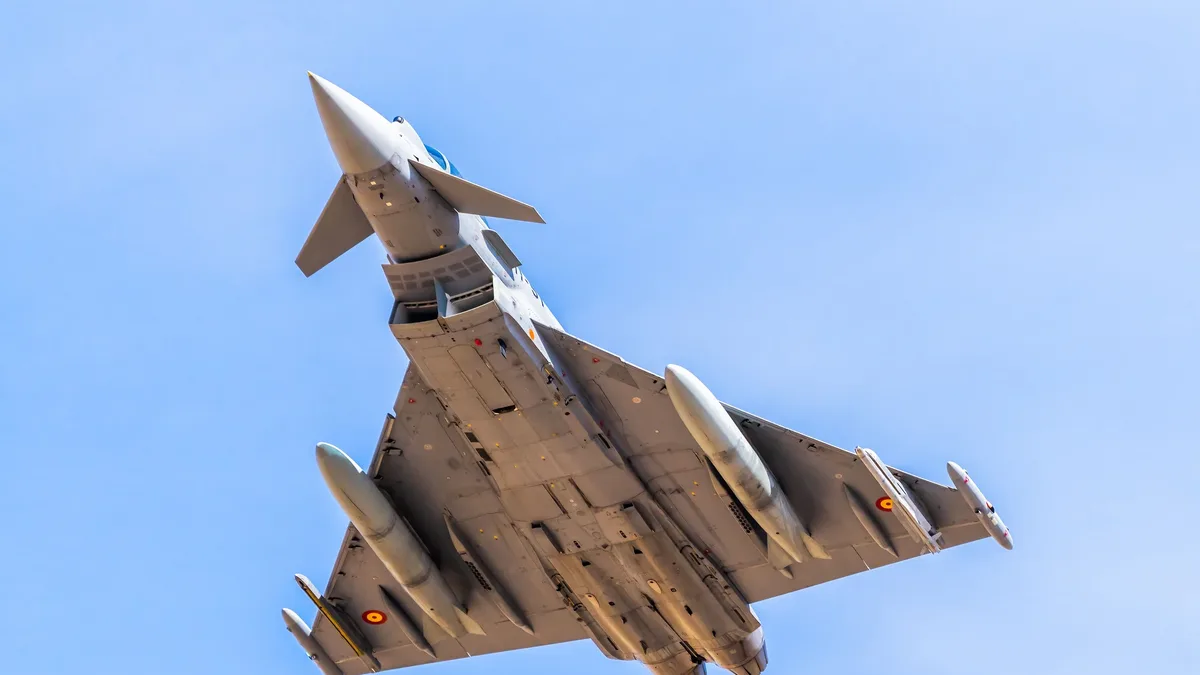
KF-21 Boramae inducted into Republic of Korea Air Force
South Korea has inducted its first domestically developed KF-21 Boramae fighter jet into active service, assigning it to the reactivated 156th Fighter
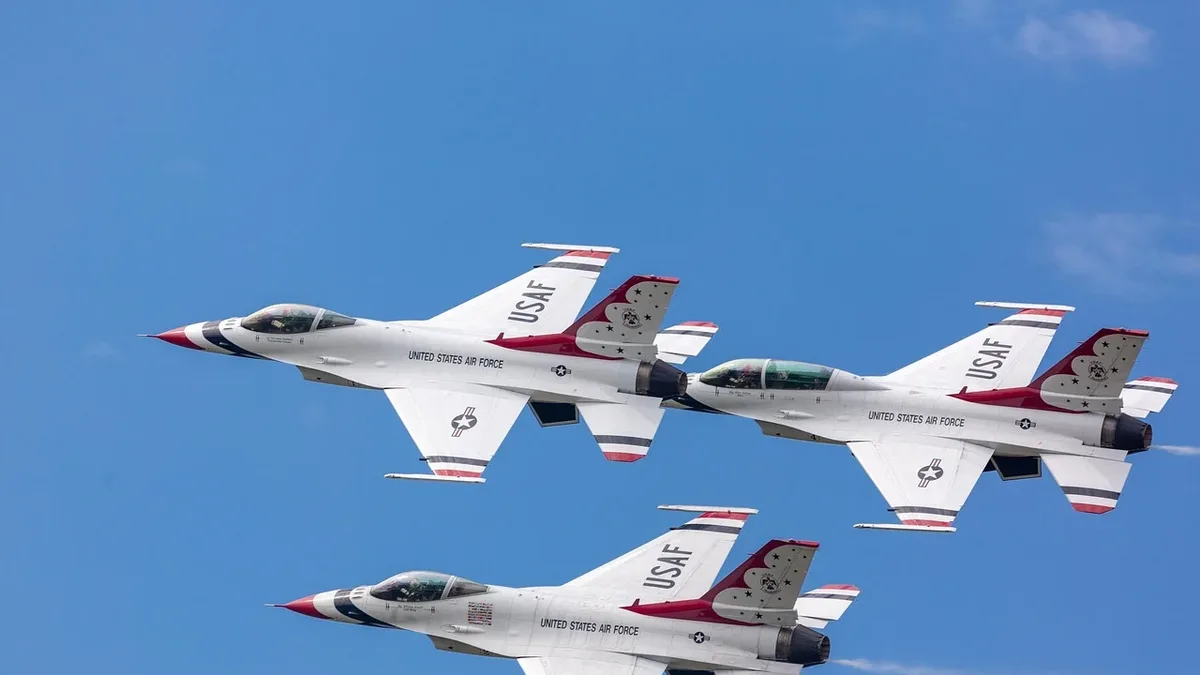
Air Force Eliminates China Aerospace Studies Institute
The U.S. Air Force is cutting all 10 civilian positions at the China Aerospace Studies Institute effective October 1, shifting its unclassified...
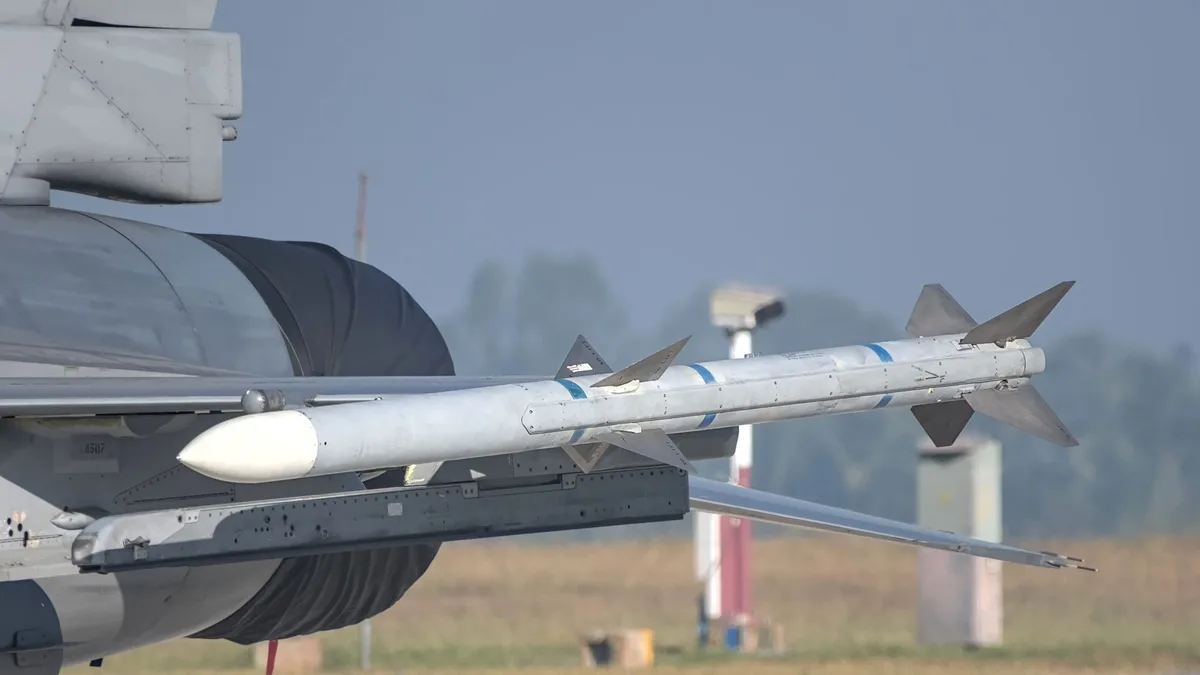
South Korea Approves New Stealth Anti-Ship Missile
South Korea's DAPA has approved a 12-year program to develop a new stealthy, long-range anti-ship missile, with an estimated cost of $1.15 billion.
Japanese Industry Hesitates on U.S. Navy Frigate Deal
Japanese defense firms, led by Mitsubishi Heavy Industries, are cautious about bidding for a U.S. Navy frigate contract due to heavy required...

South Korea boosts defense budget to record $53.9 billion
South Korea has announced a record defense budget of $53.9 billion for the coming year, an 8.2% increase focused on high-tech capabilities and